If you’re staring at a roof that’s clearly on its way out, the timing question can feel more complicated than it should be. Contractors mention “roofing season,” neighbors swear by fall, and somewhere in the back of your mind is a worry that replacing a roof in the “wrong” month might cause problems down the road. Here’s the direct answer, followed by everything that actually explains it.
The Short Answer
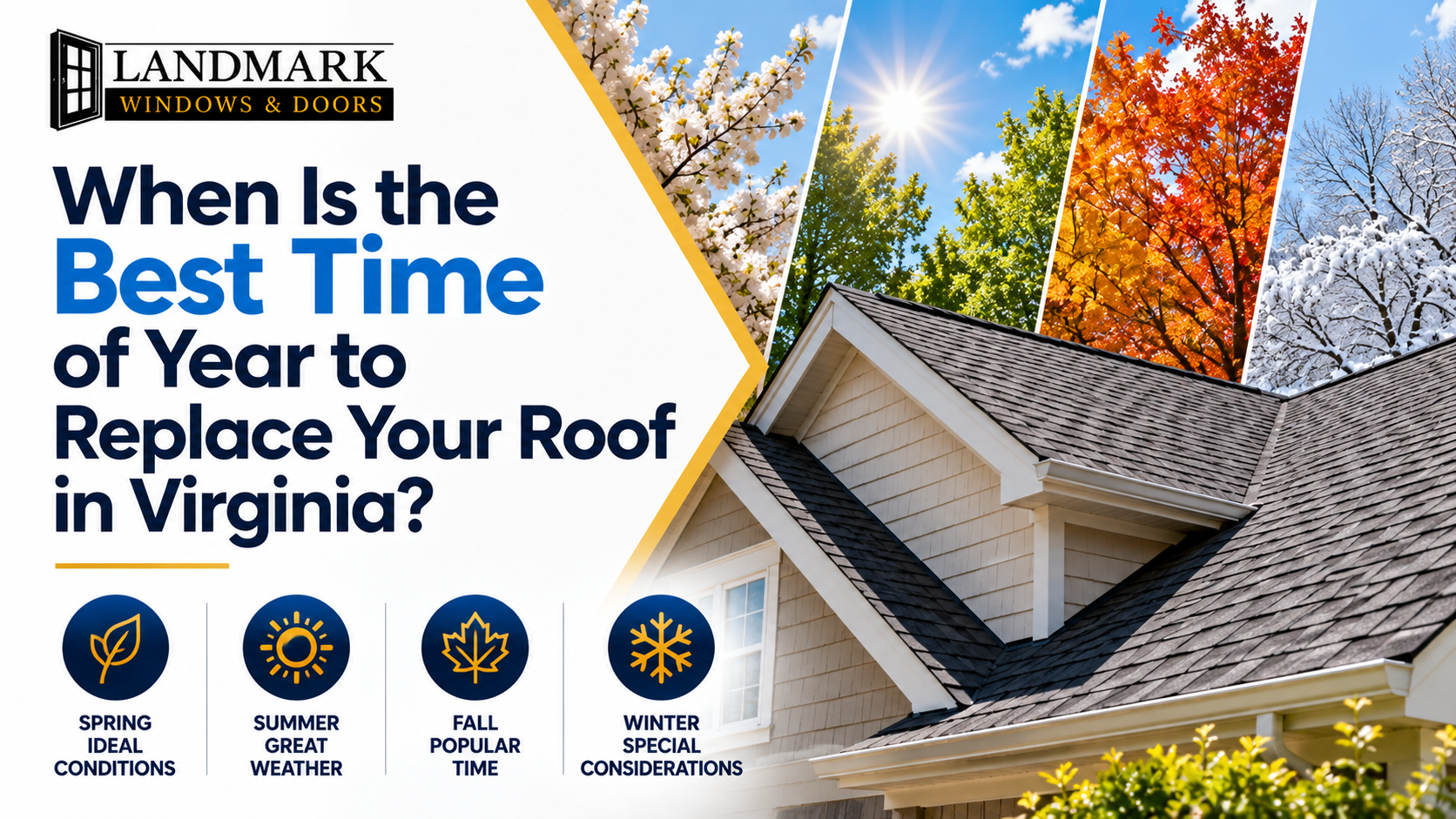
In Virginia, early fall (September through November) and spring (April through June) are generally the best windows for a roof replacement. Temperatures are moderate, humidity is lower than in summer, and shingle adhesives seal the way they’re designed to. But that’s the ideal scenario not the only acceptable one. A quality roof replacement can be done in any season in Virginia, including summer and winter, as long as it’s installed correctly. The season affects convenience and comfort more than it affects the long-term outcome of the roof itself.
Why Temperature Actually Matters for a Roof Installation
Most residential roofs in Virginia are asphalt shingles, and asphalt shingles rely on a self-sealing adhesive strip along the back of each shingle. That strip is heat-activated it needs warmth from the sun to bond the shingles together into a wind-resistant, watertight surface. This is the piece of the puzzle that drives most of the “best season” advice you’ll hear.
When the temperature is neither too high nor too low, the sealant starts to work on its own within a normal period after it is applied. When it’s very cold, the sealant activates more slowly, and shingles can also become stiffer and more prone to cracking if they’re handled or walked on too aggressively during installation. When it’s extremely hot, shingles can become soft and more susceptible to scuffing or granule loss during the install process. Neither extreme makes a roof replacement impossible it just means an experienced crew has to adjust how they work.
The Condition of Your Roof Matters More Than the Calendar
This is the part that gets lost in most “best time of year” advice: timing is a preference, not a rule, and it should never come before addressing a roof that’s actively failing. A well-installed roof will perform correctly whether it goes on in October or February. What actually determines how long a roof lasts and how well it protects your home is the quality of the materials, the skill of the installation crew, and how promptly problems are addressed — not the month on the calendar.
Signs You Shouldn’t Wait for the Seasons
If you’re noticing any of the following, it’s worth getting a professional inspection now rather than timing the replacement around a preferred season:
- Water stains spreading across your ceiling or upper walls
- Shingles that are curling, cracking, or visibly missing
- Daylight visible through your attic roof boards, or damp, matted attic insulation
- Granules collecting in gutters or downspouts, a sign shingles are breaking down
- Recent storm, hail, or wind damage, even if it looks minor from the ground
- A roof that’s at or beyond its expected lifespan for its material
Any one of these is a sign that your roof’s ability to protect your home is already compromised. Waiting months for a “better” season to start the project gives water, wood rot, and mold more time to cause damage that’s far more expensive to repair than the roof replacement itself.
How a Good Contractor Manages Weather Risk, Regardless of Season
One of the biggest differences between an experienced roofing crew and an inexperienced one shows up in how they handle weather that isn’t ideal. That includes tracking forecasts closely to avoid starting a tear-off right before rain, using manual sealing techniques when cold temperatures slow down adhesive strips, protecting your home with tarps and drip edges if a project has to pause partway through, and sequencing the work so your roof is never left exposed overnight. This is why the installation crew matters more than the month — the right team delivers a roof that performs the same whether it was installed in April or January.
Why Booking Early Helps, Whatever Season You Choose
Roofing demand isn’t evenly spread throughout the year. Fall books up quickly as homeowners try to get ahead of winter, and after a major storm rolls through the region, demand for roofing crews can spike sharply in a very short window. Getting your roof inspected and scheduling your estimate before you’re in an urgent situation gives you more control over timing and access to your preferred installation window than waiting until a leak forces the decision.
Conclusion
If you have the luxury of choosing, early fall and spring offer the most favorable natural conditions for a roof replacement in Virginia moderate temperatures, lower humidity, and reliable shingle sealing. But a roof that’s failing shouldn’t wait for a preferred season. The material quality and the skill of the crew installing it matter far more to the long-term performance of your roof than the month it goes on.
At Landmark, we’ve installed roofs across Virginia in every season for more than 25 years, and every installation is backed by our lifetime guarantee and GAF-certified craftsmanship. Whether your roof needs attention now or you’re planning ahead for the season that works best for you, we’re happy to walk you through what we see and what timing makes sense for your home.
Ready to find out what your roof needs? Schedule your free roofing estimate with Landmark today.