
You crank up the AC, but the room near your front entrance still feels warm and stuffy. If this sounds familiar, your front door might be the silent reason your cooling system is working overtime. Many homeowners searching for window & door replacement Fredericksburg services start their journey here, after noticing their entryway feels noticeably hotter than the rest of the house. It’s a small detail that’s easy to overlook, but it can have a big impact on comfort and energy costs.
Your front door isn’t just a design. It’s a critical barrier between your climate-controlled home and Virginia’s brutal summer heat. When that barrier fails, your energy bills rise, your AC works harder, and certain rooms become uncomfortable no matter how you adjust the thermostat.
Key Takeaways
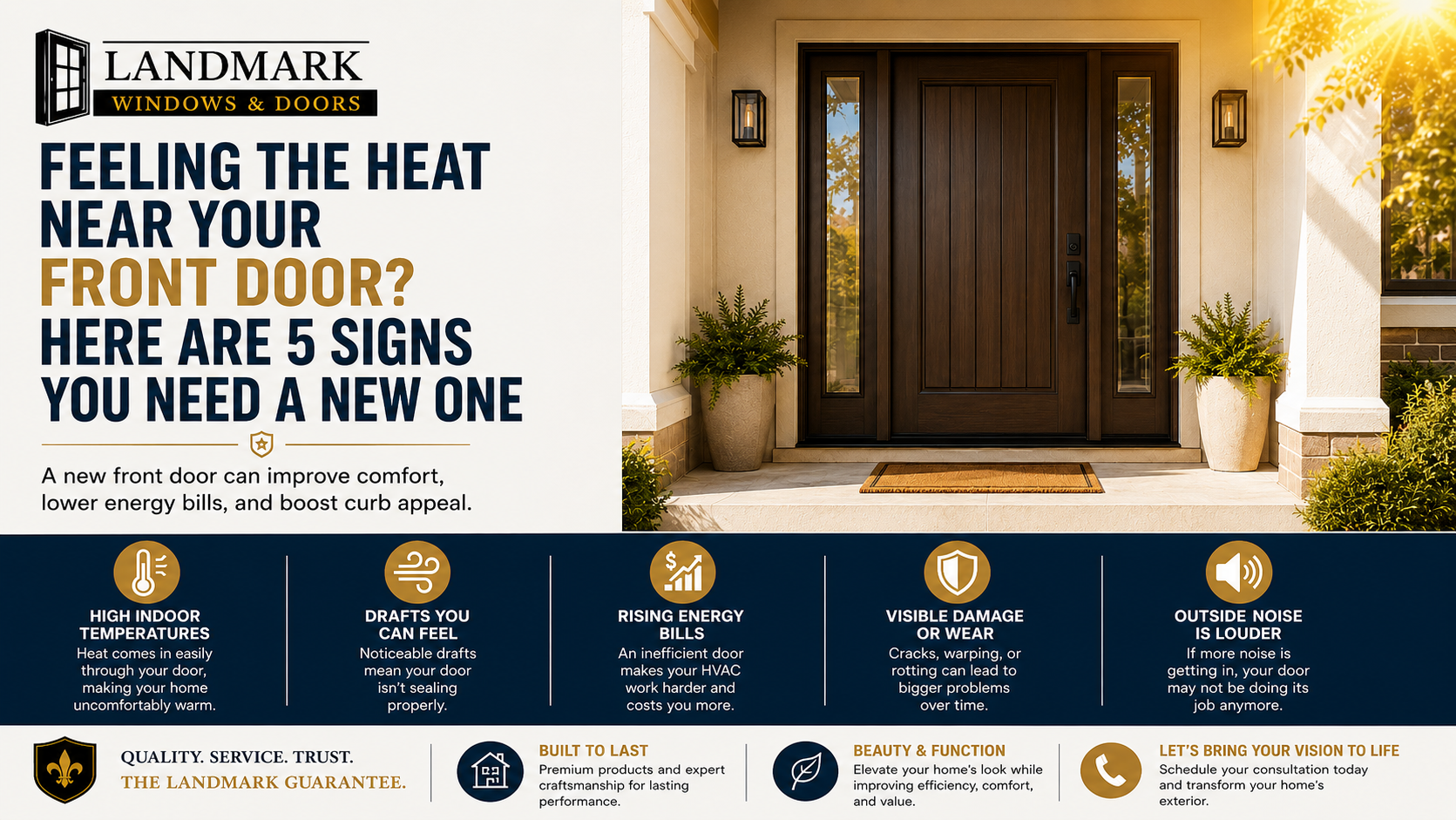
- Heat near your front door usually points to failing seals, warped frames, or outdated materials
- Rising summer energy bills are often connected to poor door insulation, not just your HVAC system
- Visible gaps, light leaking through the frame, or a door that feels warm to the touch are clear red flags
- Upgrading to an insulated, energy-efficient door improves comfort, security, and home value
- Pairing entry door installation Fredericksburg services with new windows creates a fully sealed home exterior
Why This Topic Matters
- A poorly insulated front door allows conditioned air to escape, forcing your HVAC system to run longer and harder
- Heat transfer through an aging door can make entryway rooms uncomfortable even when the rest of the home feels fine
- Older doors often lack the weatherstripping and core insulation found in modern, energy-efficient models
- A failing door isn’t just a comfort issue. It can compromise home security and curb appeal at the same time
- Addressing the problem early prevents long-term damage to the door frame and surrounding wall structure
Heat Radiating From the Door Itself
If you place your hand on your front door during a hot afternoon and it feels noticeably warm on the inside, that’s heat transferring directly through the material. Many older doors, especially those without an insulated core, absorb outdoor temperatures and radiate that heat into your home.
Modern entry doors are built with insulated cores, often using polyurethane foam, that block this kind of heat transfer almost entirely. Upgrading to one of these doors stops the radiating heat problem at its source, keeping your entryway comfortable even during Virginia’s hottest months.
Visible Gaps or Light Leaking Through the Frame
Stand inside your home with the lights off during the day and look closely at the edges of your front door. If you see daylight slipping through the frame, that’s a direct sign that warm air is finding its way in, and your cooled air is finding its way out.
These gaps usually develop as weatherstripping wears down or the frame shifts slightly over time. While weatherstripping can sometimes be replaced on its own, persistent gaps often mean the door itself has warped and needs a full replacement to restore a tight seal.
Worn or Missing Weatherstripping
Weatherstripping is the rubber or foam seal lining your door’s frame, and it’s one of the first components to wear out. Once it cracks, flattens, or falls off entirely, your door loses its ability to block drafts and heat.
Replacing weatherstripping is a quick fix for minor leaks, but if your door is older or the frame has shifted, a new door with built-in, durable sealing systems offers a more lasting solution.
Rising Summer Energy Bills
If your electricity bill has been climbing steadily without a clear reason, your front door deserves a closer look. Heat seeping in through an inefficient door forces your air conditioning system to work harder to maintain a consistent indoor temperature, and that extra strain shows up directly on your monthly statement.
Replacing an outdated door with an energy-efficient model, especially one rated for the
Mid-Atlantic climate, helps stabilize your indoor temperature and reduces the workload on your
HVAC system. Many homeowners notice a measurable difference in their bills within the first full season after installation.
A Door That’s Difficult to Open, Close, or Lock
Beyond temperature issues, a door that sticks, drags, or no longer locks smoothly is often a sign that the frame has warped due to years of expansion and contraction from heat and humidity.
This warping doesn’t just create a functional annoyance. It also creates the small gaps that let heat and air infiltrate your home.
A professional assessment can determine whether realignment will solve the issue or whether the door and frame need to be replaced entirely. In many cases, a new, properly fitted door resolves both the functional and energy efficiency problems at once.
Outdated Glass or Sidelights
If your front door includes glass panels or sidelights, older single-pane glass can be a significant source of heat gain, even if the door itself is in decent shape. Sunlight passing through these panels can heat up your entryway considerably during peak summer hours.
Choosing a door with Low-E coated, insulated glass panels addresses this problem directly, blocking UV rays and reducing heat transfer while still allowing natural light into your home. This is especially worth considering when selecting among the best windows for Virginia homes and matching door styles for a cohesive, energy-efficient exterior.
Frequently Asked Questions
-
Is it better to repair my current door or replace it entirely?
If the issue is limited to worn weatherstripping or minor hardware problems, a repair may be enough. However, if the frame is warped, the core lacks insulation, or multiple issues are present, a full replacement typically offers better long-term value.
-
What makes a front door “energy-efficient”?
Energy-efficient doors typically feature an insulated foam core, tight-sealing weatherstripping, and, if applicable, Low-E coated glass panels. These elements work together to minimize heat transfer and reduce strain on your HVAC system.
-
Will upgrading my front door really make a noticeable difference in comfort?
Yes. Homeowners often notice an immediate difference in how their entryway feels, along with a gradual reduction in energy bills as their HVAC system no longer has to compensate for the heat loss.
Final Thoughts
Your front door plays a far bigger role in your home’s comfort and energy efficiency than most homeowners realize. From radiating heat and visible gaps to rising summer bills and sticking hardware, these signs all point to the same underlying issue: it’s time for an upgrade.At Landmark Windows & Doors, we help Virginia homeowners address these problems with high-quality, energy-efficient entry doors built to handle the region’s demanding climate. Whether you’re noticing the early signs of heat loss or you’re ready for a full exterior upgrade, our team is here to help you find a door that keeps your home comfortable, secure, and efficient all year round.