
Exterior home improvement looks different in 2026 than it did even a few years ago. Homeowners across Virginia are no longer renovating purely for curb appeal — they’re renovating to keep up with longer heat waves, heavier storms, and more unpredictable seasons. At Landmark Windows & Doors, we’ve watched this shift firsthand through 25+ years of working on homes across Fredericksburg and the surrounding region, and it’s reshaping how people think about windows, doors, roofing, and siding alike.
Understanding the Shifting Climate Landscape
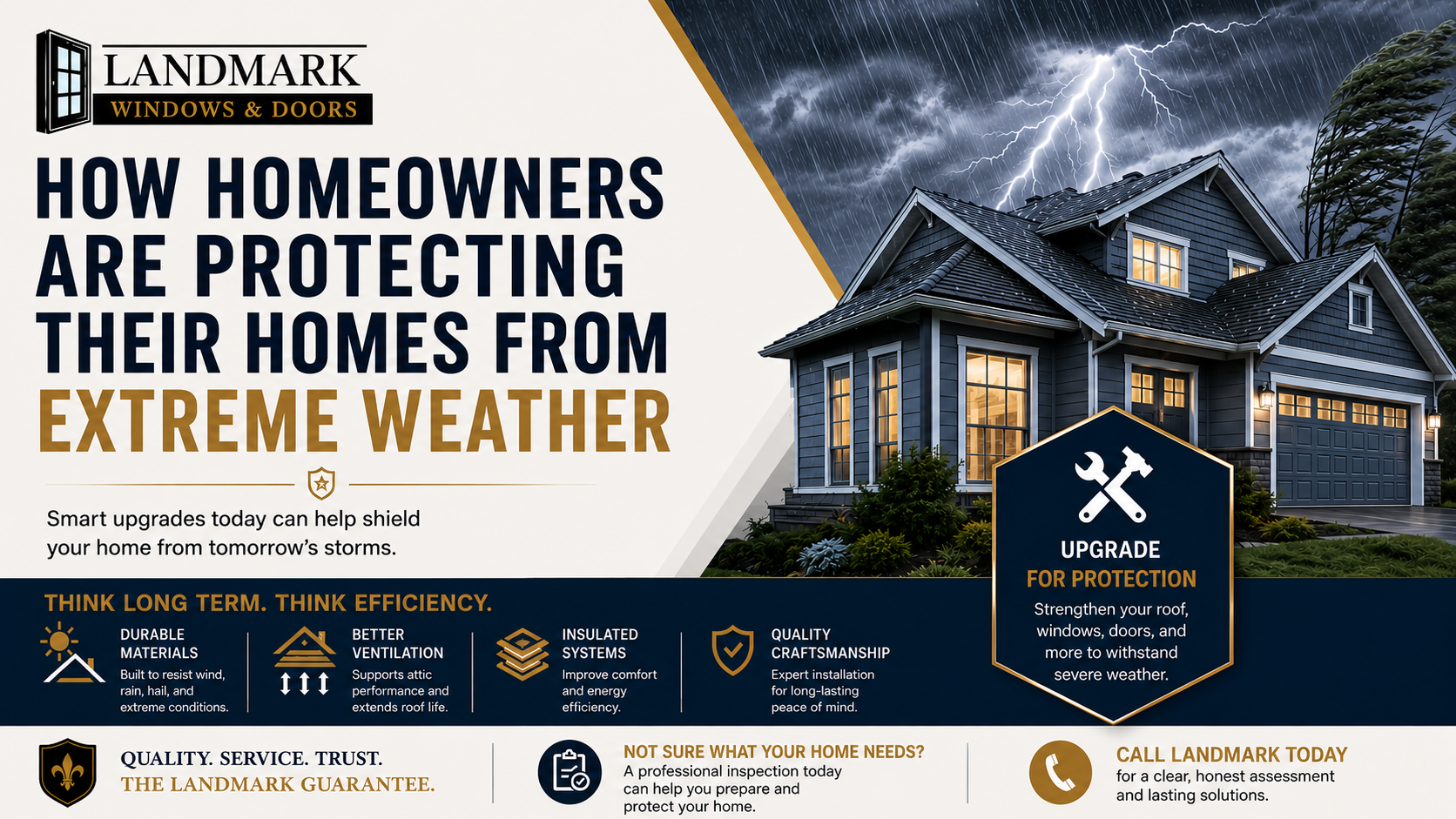
Homes built decades ago simply weren’t designed for the weather patterns many regions are seeing now. Heavier rainfall, stronger wind events, and longer stretches of extreme heat are putting more strain on aging exteriors than ever before. Roofs wear out faster. Siding cracks and warps under temperature swings. Older windows and doors let in drafts and moisture that didn’t used to be a problem.
This has pushed exterior home improvement away from a purely cosmetic decision and toward a protective, long-term investment. Homeowners are increasingly renovating proactively — before damage occurs — rather than waiting until a storm forces their hand.
The Rise of Resilient Materials
Material science has caught up with this need. Reinforced vinyl window frames, impact-rated glass, fiber cement siding, and storm-resistant roofing shingles have all become more widely available and more affordable than they were even five years ago. These materials are engineered specifically to handle wider temperature swings, higher wind loads, and more moisture exposure without breaking down as quickly as older-generation products.
What’s notable is that resilience and aesthetics no longer have to be a trade-off. Today’s
impact-resistant windows and storm-rated siding come in a wide range of styles and finishes, so homeowners don’t have to sacrifice curb appeal to gain durability.
Key Exterior Home Improvement Adaptations
Across the renovation projects we see, a few clear patterns stand out in how homeowners are adapting their homes to changing weather.
Energy-Efficient Door and Window Solutions
Windows and doors are often the first thing homeowners address, since they’re typically the weakest point in a home’s thermal envelope and storm protection. Professional door and window installation has become essential here — even a high-performing window underperforms if it isn’t properly sealed, squared, and flashed during installation.
Some of the most common upgrades we install include:
- Low-E glass coatings that reduce heat transfer, keeping homes cooler in summer and warmer in winter
- Multi-pane windows with insulated gas fills for better year-round temperature stability
- Reinforced vinyl frames that resist warping in extreme heat or cold
- Impact-rated glass designed to withstand wind-driven debris
- Weather-stripped entry and patio doors that seal tightly against drafts and moisture
- Properly flashed door and window openings to prevent water intrusion during heavy rain
Each of these only delivers its full benefit when it’s installed correctly — which is why professional door and window installation, not just product selection, has become a central part of climate-conscious renovation planning.
Sustainable Roofing and Siding Choices
Roofing and siding are getting the same level of attention. Asphalt, metal, and composite roofing options are increasingly chosen based on how well they handle wind uplift and temperature cycling, not just appearance. Metal roofing, for example, tends to hold up well against high winds and reflects heat more effectively than traditional shingles, while GAF-certified asphalt systems offer strong wind warranties when installed correctly.
Siding choices are following a similar pattern. Vinyl, fiber cement, and composite siding are now selected with moisture resistance and temperature tolerance in mind, helping protect the home’s structure from the inside out. Well-maintained gutters play a supporting role here too — directing water away from siding, foundations, and landscaping before it can cause damage.
Financial Considerations and Future-Proofing Your Home
Climate-resilient upgrades often come with a higher upfront cost than basic replacements, which understandably gives some homeowners pause. The way to evaluate this is by looking at total cost over time rather than the sticker price alone.Impact-resistant materials reduce the likelihood of storm damage and the repair costs that come with it. Many of these upgrades also support long-term home value, since buyers increasingly factor resilience and efficiency into their
decisions.Financing has made these upgrades more accessible too. Flexible payment plans allow homeowners to start a renovation without paying the full cost upfront, spreading the investment out in a way that fits a wider range of budgets.
Government Programs and Incentives for Green Renovations
Beyond financing, homeowners should also look into available incentives for energy-efficient upgrades. Programs vary by state and change from year to year, but it’s worth checking for federal tax credits and any state or utility-level rebates tied to energy-efficient windows, doors, insulation, or roofing materials before starting a project. A quick conversation with a tax professional or a check of current program guidelines can sometimes meaningfully offset the cost of a climate-conscious renovation.
FAQs
How are homeowners preparing their exteriors for both storms and extreme heat in the same renovation?
Many are choosing dual-purpose materials — like impact-rated windows with Low-E coatings, that resist wind-driven debris while also blocking heat transfer, so one upgrade addresses both ends of the weather spectrum.
Do storm-resistant materials also help with energy efficiency?
Often, yes. Materials built to withstand wind and impact, like reinforced vinyl window frames or insulated siding, tend to seal tighter than older products, which also reduces drafts and heat loss year-round.
Is it possible to renovate for climate resilience without a full exterior overhaul?
Yes. Many homeowners start with the most exposed areas first, like south-facing windows or an aging roof, and phase the rest of the renovation over time rather than tackling everything at once.
Conclusion: Building a Safer, More Sustainable Home
Climate change is reshaping exterior home improvement in ways that go well beyond a passing trend. Homeowners in 2026 are thinking longer-term — weighing storm resistance and energy performance alongside style — and recognizing that professional door and window installation is central to making any of these upgrades actually perform as intended.
Whether you’re starting with a single window replacement or planning a full exterior overhaul, the goal is the same: a home that’s better prepared for whatever the weather brings next. When you’re ready to make the move, Landmark Windows & Doors will help you select the right materials and get them installed with precision — all backed by a guarantee designed to stand the test of time.