
Few home maintenance tasks are as time-consuming, expensive, or easy to put off as repainting siding. Scraping, priming, and repainting every few years eats into weekends and budgets alike, and the results rarely last as long as promised. Celect composite siding was engineered to remove that cycle entirely, offering a finish designed to hold its color and performance for decades rather than seasons. Whether you’re renovating a starter home or maintaining a property you’ve owned for years, understanding what makes this material different can save you significant time and money down the road. Here’s what to know before you decide.
Why Some Siding Ages Gracefully and Some Doesn’t
Not all siding failures happen the same way, and understanding the difference explains a lot about why some homes need repainting every few years while others barely need attention at all. Natural materials like wood were never designed to resist the elements on their own they rely entirely on an outer layer of paint or sealant to do that job for them. Once that layer starts to break down, the wood underneath is left exposed, and moisture works its way in long before any visible damage appears. Vinyl improves on this somewhat since the material itself doesn’t rot, but it’s still vulnerable to temperature extremes: prolonged sun exposure causes gradual, uneven fading, and freezing temperatures can make it brittle enough to crack under minor impact.
What Makes Cellular Composite Siding Different
Cellular composite siding is engineered specifically to eliminate the weaknesses that drive up maintenance costs on traditional materials.
Material Composition. Built primarily from PVC resin reinforced with mineral fillers, polymer modifiers, and UV inhibitors, the material resists the moisture absorption and brittleness that plague wood and standard vinyl.
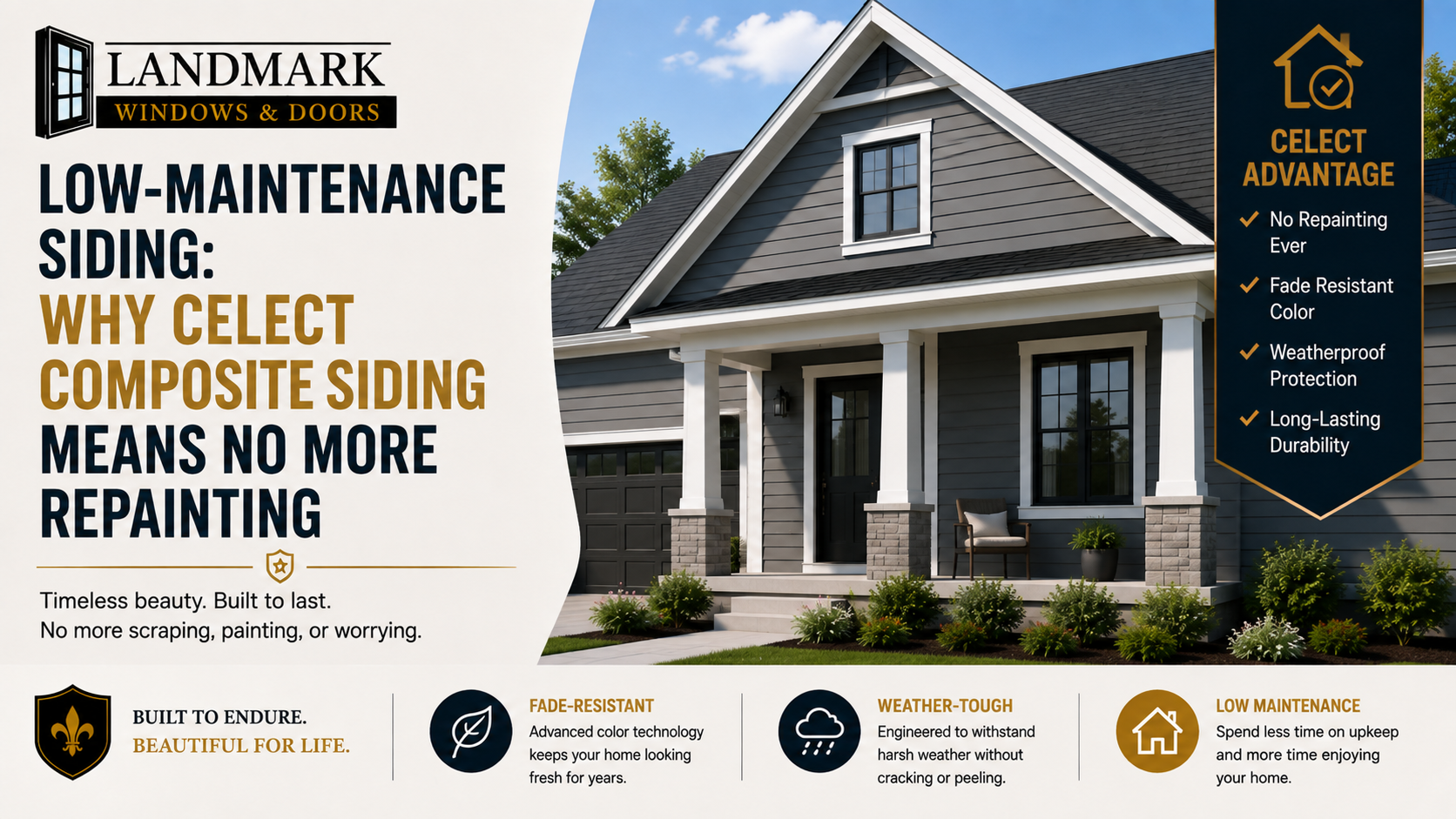
Factory-Applied Finish. A low-gloss Kynar Aquatec® coating is baked on during manufacturing rather than applied on-site, giving it significantly better color retention and fade resistance than traditional acrylic paint.
Water and Mildew Resistance. The cellular structure resists water absorption and dirt buildup, which means less mildew growth and far less need for scrubbing or pressure washing over time.
Design Flexibility. Available in lap, shake, board & batten, and V-groove profiles, it offers the authentic texture and curb appeal of traditional siding without the upkeep that typically comes with it.
Sustainability. Made from recyclable materials and installed without producing harmful silica dust, it’s a cleaner option for environmentally conscious homeowners compared to fiber cement alternatives.
Together, these characteristics are why siding is increasingly chosen by homeowners who want lasting curb appeal without a recurring maintenance schedule.
Choosing the Right Siding Installer for a Low-Maintenance Result
Even the best-engineered siding underperforms if it isn’t installed correctly, so the contractor you choose matters as much as the material itself. Look for a provider who explains how they handle seams, flashing, and moisture barriers, since poor installation can undermine even the most weather-resistant material. Ask whether they have direct experience with composite siding specifically, since installation techniques differ somewhat from wood or vinyl. Confirm what warranty coverage applies to both the material and their labor, and ask to see examples of past projects so you can evaluate the quality of their finished work firsthand. A contractor who takes time to walk you through their process, rather than rushing straight to a quote, is typically the one who delivers results built to last.
The Value of Siding That Doesn’t Need Painting
For many homeowners, the biggest appeal of composite siding isn’t just the material it’s what you no longer have to do. Low maintenance siding removes an entire category of recurring home maintenance, freeing up both time and budget for other priorities. Instead of scraping, priming, and repainting every several years, maintenance is typically limited to occasional rinsing to remove surface dirt. Over a 20-year span, that difference adds up to meaningful savings, not just in materials and labor, but in the hours homeowners would otherwise spend managing an ongoing upkeep cycle.
Cost Considerations
It’s easy to compare siding options purely on upfront material and installation cost, but that comparison misses the bigger picture. Cheaper siding materials often carry hidden long-term costs more frequent repainting, higher risk of moisture damage, and shorter overall lifespan before replacement becomes necessary again.
A transparent quote should break down material cost, installation labor, and warranty terms clearly, so you can evaluate the investment against its expected lifespan rather than judging it on price alone. When you factor in the money and time saved by never needing to repaint,
composite siding often proves to be the better value over the life of the home, even if the initial cost is higher than lower-grade alternatives.
Quick Checklist for Choosing Low-Maintenance Siding
- Material composition – Confirm PVC-based construction with UV inhibitors and impact stabilizers.
- Finish quality – Look for a factory-applied, fade-resistant coating rather than field-applied paint.
- Moisture resistance – Verify the material resists water absorption and mildew growth.
- Design options – Choose a profile and texture that matches your home’s architectural style.
- Installer experience – Confirm hands-on experience specifically with composite siding installation.
- Warranty coverage – Understand what’s covered for both material defects and installation issues.
- Long-term value – Weigh upfront cost against decades of avoided repainting and upkeep.
Conclusion
Choosing cellular composite siding means trading a recurring cycle of scraping, priming, and repainting for a material engineered to hold its finish for decades with minimal upkeep.
Understanding what drives traditional siding’s maintenance demands and how composite materials are built to avoid them puts you in a strong position to make a decision that pays off well beyond installation day.
For homeowners ready to stop budgeting time and money for repeat paint jobs, Celect composite siding offers a proven path to lasting curb appeal without the maintenance grind. Landmark Windows & Doors has helped Fredericksburg homeowners make exactly this kind of long-term, low-maintenance upgrade to their homes.