
Original windows are an important part of what gives an older home its authentic feel. The wavy glass, the slim frames and the proportions are hard to copy. They can also be drafty, hard to open and tired. So the real question is not whether old windows are bad. It is whether yours can still do their job, and whether keeping them going makes sense for the way you live in the house.
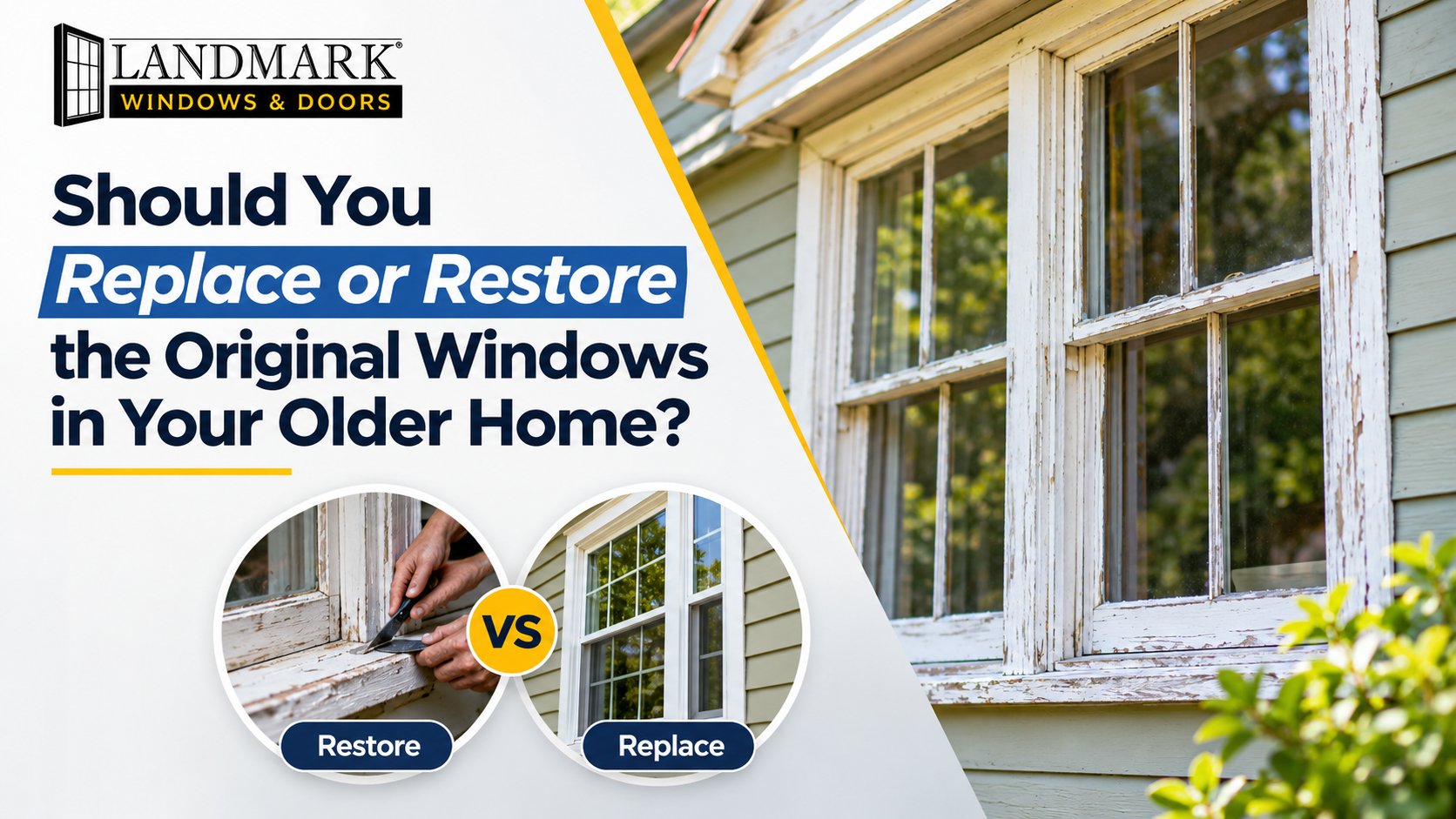
Why Original Windows Are Not Automatically the Problem
Many older windows were built from solid wood that has lasted well when it was kept painted and dry. A window that sticks because of built-up paint, or rattles because the glazing putty has dried out, has a problem that can often be fixed without replacing the whole unit. A drafty window is often caused by worn weather stripping or a sash that no longer fits snugly. If the frames are sound and the sashes still move, repair may be the sensible answer, and we will tell you so.
What a Drafty Window Is Really Telling You
Before you decide anything, find out where the air is actually coming from. On a windy day, hold your hand near the edge of the sash, along the glass and around the trim where the frame meets the wall. A gap between the sashes points to worn seals. Air at the edge of the glass suggests failing glazing. Air around the outside of the frame is often a sealing problem in the wall, not the window itself. Each source has a different fix, and guessing wrong is how people end up spending money without feeling any difference.
Signs Your Windows Are Past Saving
Some problems are hard to repair well. Watch for:
- Rot in the sill or frame that is soft, crumbling or keeps coming back
- Sashes that will not open, or will not stay open
- Cracked glass or frames that have pulled apart at the corners
- Drafts that continue after repairs
- Water stains or damage around the window inside the house
One of these may be repairable. Several together usually point to replacement. Rot is the one to take most seriously, because it often means moisture has been getting into the wall around the window and not only into the window itself.
What About Lead Paint?
If your home was built before 1978, the paint on the window frames may contain lead. Federal EPA rules require contractors who disturb paint in homes of that age to be certified and to follow lead-safe work practices. Landmark is an EPA Lead-Safe Certified Firm. Scraping or sanding old painted window parts yourself can put fine dust into the air, which is a good reason to leave this work to a certified firm, especially if young children live in the home. You can read more on the EPA’s lead renovation page.
Check the Rules Before You Order
Some older homes sit in historic districts or HOAs with their own rules about window changes. In the City of Fredericksburg, the Architectural Review Board reviews exterior changes in the historic district, so check before you order. A quick call before you commit costs nothing, and approval can take time. Our guide on whether you need a permit in Virginia covers the other local requirements.
If You Do Replace, Know Your Options
Replacement does not have to mean changing the whole look. The choices include insert replacement windows that fit inside your existing frame and full-frame replacement that removes the old window completely. Inserts keep more of the existing trim and are a good fit when the frame is in good shape. Full-frame replacement makes more sense when the frame itself is damaged, because it lets the opening be inspected and repaired. When you compare styles, pay attention to the proportions and the grid pattern, since these shape how the house looks from the street.
Conclusion
The right answer for an older home depends on the condition of the frames, not the age of the windows. If you are not sure which side yours fall on, schedule a free estimate. We will look at the frames and the openings with you and explain what we see, whether that means repair or replacement.