
A roof problem can create a lot of stress because the stakes are high: your home’s structure, comfort, and long-term value all depend on getting the decision right. The good news is that not every roof issue means a full replacement, and not every leak can be solved with a quick patch. Homeowners who understand the difference between roof repair and roof replacement are better prepared to protect their homes and avoid unnecessary costs.
At Landmark, we believe roofing decisions should be clear, practical, and based on real conditions rather than fear or guesswork. This guide explains the most common signs that point to repair versus replacement, and it also covers how energy-efficient roofing can fit into the decision for homeowners looking at long-term value.
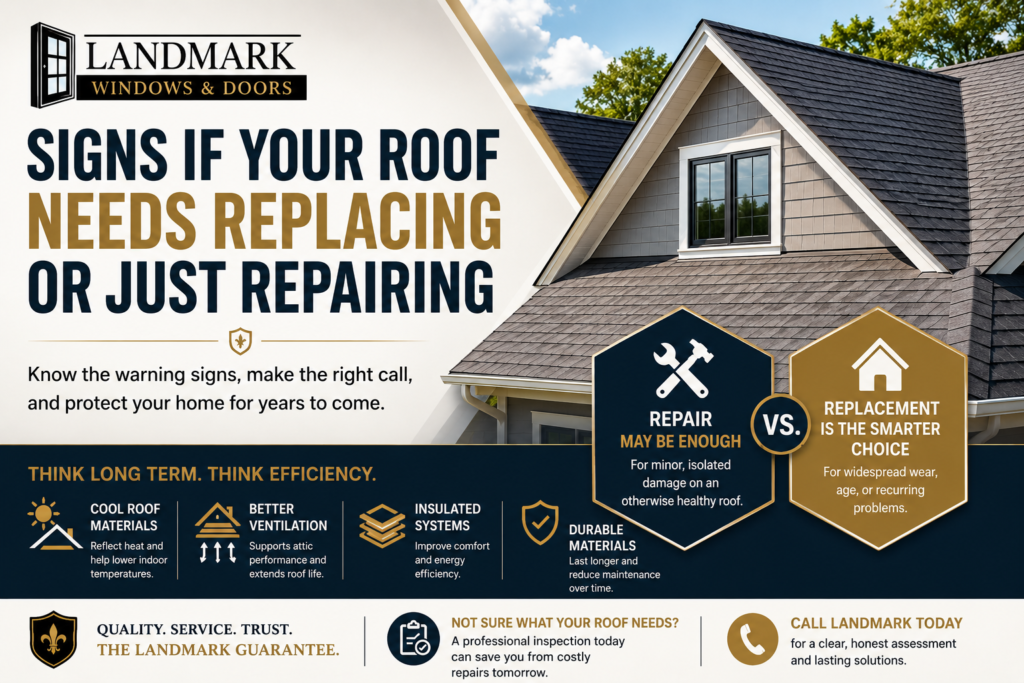
Why roof condition matters
A roof does more than keep just water out. It affects energy use, indoor comfort, curb appeal, and the overall durability of the home. If your roof is aging, damaged, or underperforming, the effects can show up as higher utility bills, drafts, stains, or recurring maintenance issues.
The roofing market in 2026 is also changing. Homeowners are showing more interest in materials that last longer, perform better in varied weather, and support energy efficiency goals. That means the decision is no longer just “fix it or replace it”; it is also about choosing a roofing solution that fits the home’s needs for years to come.
Signs a repair may be enough
Not every roofing issue is a sign of failure. In many cases, a small, isolated problem can be handled with a targeted repair. That is often the right answer when the roof is still relatively young and the damage is limited to one section.
A repair may be enough if you notice:
- A few missing or lifted shingles after a storm.
- A small leak with a clear source.
- Minor flashing damage around a vent, chimney, or skylight.
- Localized wear in just one part of the roof.
- No major sagging, rot, or widespread shingle deterioration.
When the issue is contained, repair can restore function without forcing a full replacement. The key is to make sure the underlying roof system is still in solid condition.
Signs replacement is the smarter choice
If problems keep returning, repair may only delay the inevitable. A full roof replacement is usually the better option when damage is widespread, the roof is near the end of its service life, or repairs are becoming more frequent and expensive.
Warning signs that often point to replacement include:
- Curled, cracked, or brittle shingles across multiple areas.
- Multiple leaks or water stains inside the home.
- Soft spots, sagging, or visible structural concerns.
- Granule loss that leaves shingles looking thin or bare.
- Repeated repairs over a short period.
- Roof age that is already well past what the material was designed to handle.
If several of these signs appear at once, replacement usually provides better long-term value than continuing to patch individual problems.
Repair or replace
Repair is usually best for isolated damage on a roof that is otherwise healthy. Replacement is usually best when the roofing system is showing age, wear, or repeated failure across a wider area.
Energy-efficient roofing
Energy efficiency is becoming a much bigger factor in roofing decisions. Homeowners are looking for materials that help reduce heat gain, improve comfort, and support a more stable indoor environment. That does not mean every roof needs a premium upgrade, but it does mean energy performance should be part of the conversation.
Energy-efficient roofing solutions may include:
- Reflective or cool-roof materials that help reduce heat absorption.
- Better ventilation strategies that support attic performance.
- Insulated systems or roofing assemblies designed for longer-term comfort.
- Durable materials that maintain performance and reduce maintenance over time.
These benefits matter most when a roof is already being replaced. If you are investing in a new system, choosing materials with better thermal performance can improve the home’s overall comfort and efficiency.
How to assess damage
Homeowners can spot many roof issues from the ground or from inside the home. Start with a simple visual check after heavy rain, strong wind, or hail. Look for missing shingles, bent flashing, dark stains on ceilings, or debris in the gutters.
Inside the home, pay attention to:
- Water spots on ceilings or walls.
- Musty smells in the attic.
- Daylight showing through the roof boards.
- Increased indoor heat in summer or cold spots in winter.
These signs do not always mean replacement, but they are strong indicators that a professional inspection is needed. A trained roofer can identify whether the problem is isolated or part of a larger system failure.
When to call a professional
Roofing decisions should not be based on guesswork. If you see active leaks, widespread shingle damage, sagging, or signs of water intrusion, it is time to bring in a professional. A qualified contractor can inspect the roof safely, explain what they find, and help you understand whether a repair or replacement makes more sense.
It is also smart to call a professional if you are unsure about the roof’s age or history. In many cases, the most expensive mistake is waiting too long and allowing a manageable issue to spread into structural damage. A timely inspection can save money and reduce stress.
What homeowners should ask
Before starting any roofing work, ask these questions:
- Is the damage localized or widespread?
- How much life does the roof likely have left?
- Will repair solve the issue long term?
- Would replacement be more cost-effective?
- What materials best fit the home’s needs and budget?
- What warranty or guarantee comes with the work?
These questions help shift the conversation from short-term fixes to practical long-term planning.
What Landmark offers
Landmark helps homeowners make roofing decisions with clarity and confidence. We look at the condition of the roof as a whole, not just the obvious symptom, so homeowners understand whether a repair will truly solve the issue or whether a replacement is the better investment. That approach aligns with the way we handle exterior projects across the home: practical, honest, and focused on lasting value.
Our roofing services are designed to help homeowners choose materials and solutions that fit the home’s condition, performance needs, and budget. That includes conversations about durability, energy efficiency, and long-term protection, not just the lowest upfront price.
Conclusion
Knowing whether your roof needs replacing or just repairing starts with understanding the warning signs. Small, isolated damage can often be fixed, but widespread wear, recurring leaks, or aging materials usually point toward replacement. When energy efficiency is part of the goal, a new roof can also improve comfort and support lower long-term operating costs. If you are noticing roof problems and want a clear, trustworthy assessment, Landmark is here to help homeowners make the right call with confidence.