
Picture this: it’s a warm Virginia evening, you’re carrying groceries through the kitchen, and your patio door won’t slide open no matter how hard you push. It’s a small moment, but it points to a bigger question many homeowners face. A sticking, jamming sliding door rarely has a simple yes-or-no fix. The real choice isn’t about today’s annoyance — it’s about whether repairing it now will actually hold up, or whether replacement is the smarter move in the long run. This single decision affects your home’s comfort, energy efficiency, and even how secure your house feels at night.
Understanding when sliding door repair or replacement makes sense isn’t just about saving money, it’s about protecting your home from bigger issues hiding behind a door that simply won’t slide right.
Key Takeaways
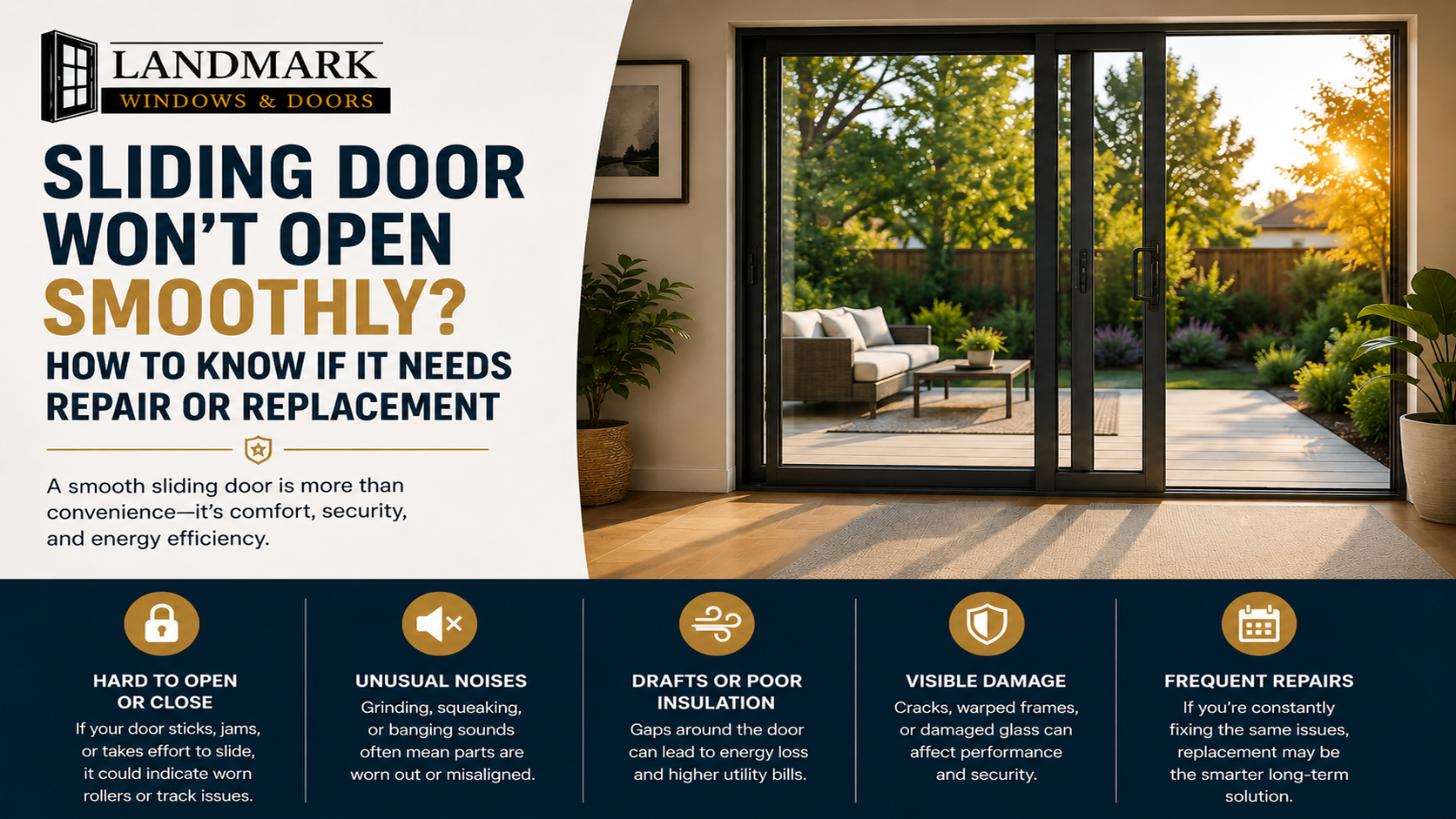
- A door that’s difficult to slide usually points to roller, track, or frame issues rather than a one-time glitch
- Repairs work well for isolated problems, but recurring issues are a sign something deeper is wrong
- Sliding glass door replacement cost depends on size, frame material, and glass upgrades, and is often a smarter investment than ongoing repairs
- Drafts, foggy glass, and rising energy bills are signs your door’s efficiency has dropped significantly
- A professional inspection is the fastest way to know whether you’re looking at a simple fix or a full replacement
Why This Topic Matters
- A jammed or slow-moving sliding door can delay quick access to your backyard during emergencies
- Continued strain on a damaged track or frame often leads to bigger structural problems over time
- Poorly sealed sliding doors let in humidity and outdoor air, straining your HVAC system unnecessarily
- Repeated repair costs can quietly add up to more than the price of a single, quality replacement
- A smooth, secure sliding door adds real value to your home’s appearance and resale potential
Is it hard to open?
When a sliding door becomes difficult to move, the issue usually starts small.Months of everyday use means dust and grime quietly pile up inside the track and the longer that’s left alone, the worse the friction gets. In other cases, the wheels or rollers beneath the door wear down from repeated use, losing the smooth glide they once had.
It’s easy to blame the door, but the real culprit is often the frame. As Virginia’s humidity rises and falls with the seasons, wood frames — and even some vinyl ones — can shift just enough to push the door out of alignment.
Cleaning and Lubricating the Track
For many homeowners, a thorough track cleaning paired with proper lubrication resolves minor sticking almost immediately. Removing built-up grime and applying a silicone-based lubricant to the rollers can restore smooth movement without any major repair work.
This simple maintenance step is worth trying first, especially if the sticking is a recent development rather than a long-standing issue.
When Repairs Stop Making Sense
There’s a tipping point where continuing to repair a sliding door no longer makes financial or practical sense. If you’ve replaced rollers, adjusted the track, and the door is still sticking within a few months, that’s a strong signal the frame itself has shifted or warped beyond a simple fix.
At this stage, it’s worth stepping back and calculating how much you’ve spent on repairs over the past year or two. Patch a door enough times and the repair bills quietly catch up to the price of a new one, except the problem’s still there.
Cracks, Fogging, or Visible Frame Damage
At this point, you’re not just dealing with something that looks bad. Cracked glass, cloudy panes, or a bent frame are rarely just cosmetic issues — they’re usually a sign of something bigger going on. Take foggy glass, for instance: when you see that hazy look between the panes, it almost always means the seal has broken down and moisture has found its way in. This is one issue that can’t be patched up, it only continues to worsen over time
Replacing the door at this point restores both function and appearance, while also eliminating the insulation gaps that come with a compromised seal or frame.
What Drives Sliding Glass Door Replacement Cost
There’s no flat rate when it comes to replacing a sliding glass door. No two sliding door replacements cost the same, and that’s because so many variables come into play size, frame material, glass type, and how complex the installation turns out to be all factor into the final number.
While a full replacement requires a bigger upfront investment than a single repair visit, it typically eliminates recurring service calls and improves your home’s energy performance immediately.
The Hidden Cost of Energy Loss
A sliding door that no longer seals tightly doesn’t just let in occasional drafts, it quietly works against your HVAC system every day. Warm air seeping in during summer or cold air leaking through in winter forces your system to run longer cycles just to maintain a steady indoor temperature.
Upgrading to a door with modern insulation, tighter seals, and improved glass technology often resolves this issue and brings noticeable relief to your monthly utility costs.
Security Risks With an Aging Sliding Door
An older sliding door with a worn lock or a frame that’s no longer flush can become a weak point in your home’s security. Doors that don’t catch firmly are much easier to force open. Take a warped frame into the equation, and the risk escalates: with enough pressure, the entire door can be lifted clean out of its track.
Frequently Asked Questions
-
What factors affect sliding glass door replacement cost the most?
Size of the door, frame material, glass type, and any custom features like impact resistance or specialty tinting all play a role in determining the overall cost of replacement.
-
Can a sliding door issue affect my home’s security?
Yes. A door that doesn’t latch properly or has a warped frame can be easier to force open, making timely repair or replacement important for maintaining your home’s security.
-
How soon should I address a sticking sliding door once I notice the problem?
It’s best to address it as soon as possible. What starts as a minor inconvenience can quickly
develop into a bigger issue involving the frame, seals, or glass, leading to higher repair or replacement costs down the line.
Final Thoughts
A sliding door that sticks or jams is rarely just a minor annoyance, it’s often your home’s way of signaling a deeper issue with the track, frame, or seals. Whether the right move is a simple repair or a full sliding door repair or replacement, catching the problem early gives you more options and helps you avoid unnecessary costs down the road.
At Landmark Windows & Doors, we help Virginia homeowners navigate exactly this kind of decision, offering honest assessments, quality replacement options, and a lifetime guarantee that stands behind every installation. If your sliding door has been giving you trouble, our team is ready to help you find the right long-term solution for your home.