Step outside on a July afternoon in Fredericksburg and you’ll feel it immediately — that thick, sticky humidity that doesn’t just affect how you feel, but quietly works against your home’s exterior every single day. Over time, this constant moisture exposure causes certain siding materials to warp, swell, or deteriorate far faster than homeowners expect. This is exactly why the Vinyl vs Fiberglass Siding comparison matters so much for homeowners in this region — choosing the wrong material isn’t just a cosmetic misstep, it’s a decision that can cost thousands in premature repairs.
Virginia’s mixed-humid climate, with its hot, damp summers and freezing winters, puts exterior materials through constant expansion and contraction cycles. Understanding which siding option genuinely holds up under these conditions — rather than just looking good on a showroom sample — is essential before making a long-term investment in your home’s exterior.
Quick Summary: This article compares how vinyl and fiberglass siding perform specifically in Virginia’s humid climate, covering durability, maintenance, energy efficiency, and cost, so homeowners can choose the option best suited to long-term performance rather than short-term savings.
Key Takeaways
- Virginia’s humidity and seasonal temperature swings accelerate wear on siding materials, making climate-appropriate material selection critical.
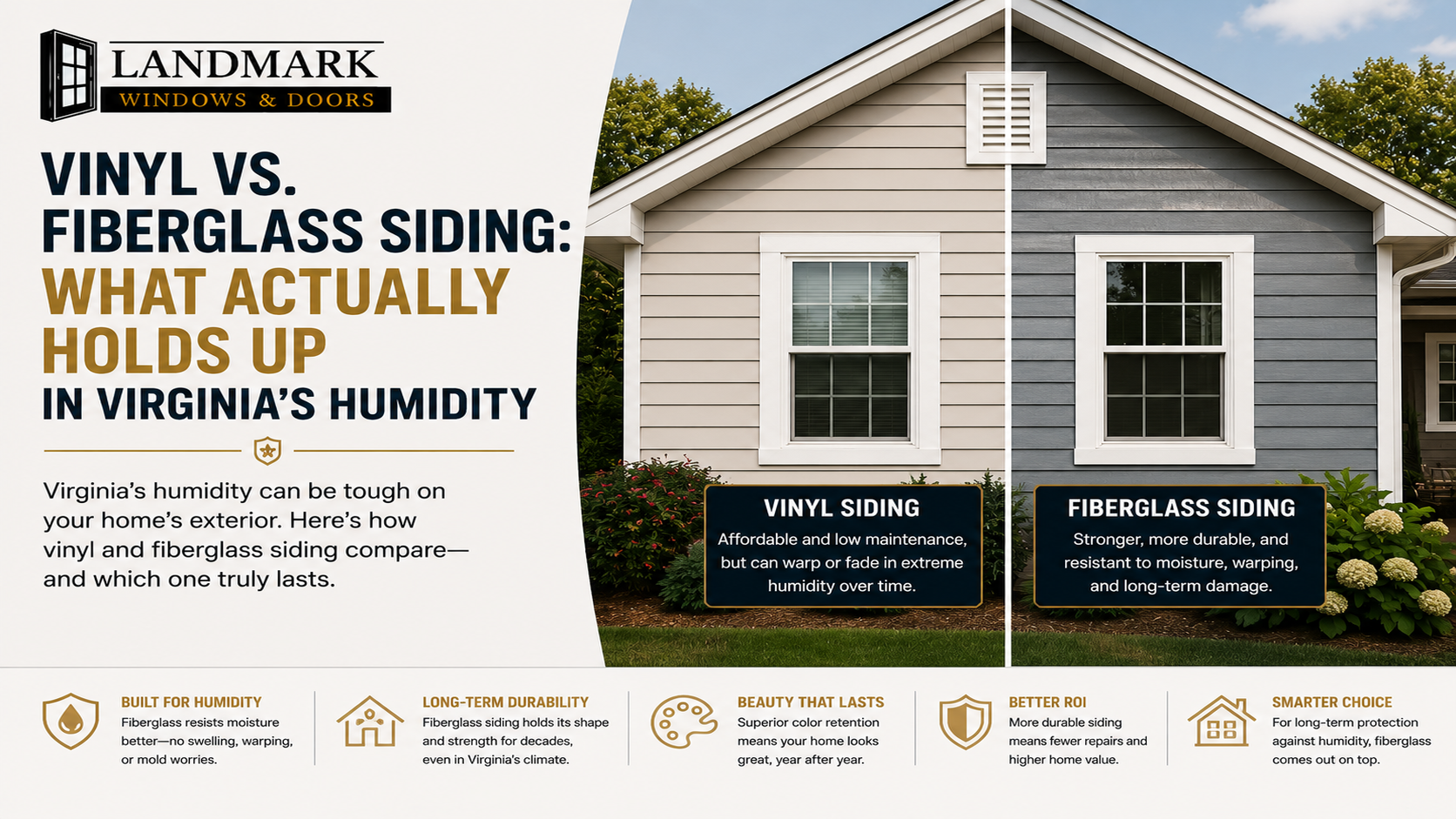
- Fiberglass siding offers superior resistance to warping and moisture absorption compared to vinyl, particularly in consistently humid environments.
- Vinyl siding remains a cost-effective, widely available option but is more prone to expansion-related damage over time.
- Both materials fall under Low-maintenance siding options, but their long-term performance under humidity varies significantly.
- Partnering with an experienced Siding replacement Virginia contractor ensures correct installation, which directly impacts how well either material performs over time.
Why This Topic Matters
- Humidity-related siding damage often develops slowly, meaning homeowners may not notice deterioration until it’s already affecting the wall structure underneath.
- The wrong siding material for your climate can lead to recurring repairs, undermining the long-term value of the investment.
- Poorly performing siding allows moisture infiltration, which can result in mold growth, wood rot, and reduced indoor air quality.
- Energy efficiency is directly tied to siding integrity, as gaps or warping create thermal leaks that increase heating and cooling costs.
- Choosing the right material upfront protects curb appeal and resale value, both of which matter significantly in Virginia’s competitive housing market.
How Humidity Affects Vinyl Siding Over Time
Vinyl siding is manufactured from PVC, a material that expands and contracts with temperature changes more noticeably than fiberglass. In Virginia’s humid summers, this expansion can cause panels to buckle or warp slightly, especially if the siding wasn’t installed with the recommended expansion gaps.
The solution isn’t necessarily avoiding vinyl altogether — it’s ensuring proper installation technique and selecting higher-grade vinyl products designed for variable climates. Thicker vinyl panels with reinforced backing tend to resist warping far better than standard, budget-grade options, making product quality just as important as the material category itself.
Why Fiberglass Resists Warping Better in Humid Conditions
Fiberglass siding is engineered with a different molecular structure than vinyl, giving it significantly better dimensional stability. This means it expands and contracts far less across temperature swings, which translates directly into fewer warping issues over the years — a major advantage in Virginia’s humid-to-freezing seasonal shifts.
This stability comes from the manufacturing process itself, where resin-reinforced fibers create a rigid, weather-resistant panel. While fiberglass siding typically requires a higher upfront investment, its resistance to humidity-driven damage often results in a longer lifespan and fewer replacement cycles, making it a strong long-term value for homeowners planning to stay in their homes for decades.
Moisture Absorption: A Critical Difference Between the Two Materials
One of the most overlooked factors in the Vinyl vs Fiberglass Siding decision is moisture absorption at the seams and joints. Vinyl panels rely heavily on overlapping design and caulking to stay watertight, and over time, these seals can weaken under constant humidity exposure.
Fiberglass siding, by contrast, is generally less porous and holds up better against prolonged moisture exposure at panel joints. Homeowners concerned about long-term moisture resistance should specifically ask contractors about seam design and sealing methods, since this detail often matters more than the base material itself.
Maintenance Demands in a Humid Climate
Both vinyl and fiberglass are marketed as low-maintenance, but humidity introduces unique upkeep challenges. Mold and mildew can develop on siding surfaces in consistently damp conditions, particularly in shaded areas of a home that don’t dry out quickly after rain.
Fortunately, both materials can be kept in excellent condition with periodic cleaning using a soft-bristle brush and mild detergent. However, fiberglass’s smoother, more weather-resistant finish tends to shed mildew growth more easily than some vinyl products, slightly reducing the frequency of required cleaning in humid climates.
Energy Efficiency Considerations for Virginia Homes
Siding does more than protect against weather — it plays a role in your home’s overall thermal performance. Gaps from warped vinyl panels can allow conditioned air to escape, while poorly insulated siding systems force HVAC systems to work harder during Virginia’s hot, humid summers and cold winters.
Many fiberglass siding systems now include enhanced insulation backing, offering a measurable improvement in energy efficiency compared to standard vinyl options. Homeowners focused on reducing utility costs should weigh this insulation factor heavily when comparing materials, since the energy savings over time can offset a portion of the higher initial investment.
Cost Comparison: Upfront Investment vs. Long-Term Value
Vinyl siding remains the more budget-friendly option upfront, making it an attractive choice for homeowners working within tighter renovation budgets. However, when factoring in potential repairs from humidity-related warping over a 15–20 year period, the long-term cost gap between vinyl and fiberglass can narrow considerably.
Fiberglass siding’s higher initial cost is often balanced by its extended lifespan and reduced repair frequency, particularly in climates like Virginia’s where humidity is a near-constant factor. Homeowners should view this decision not just as an upfront expense, but as a long-term investment calculation tied directly to their region’s climate demands.
Frequently Asked Questions
Which siding material lasts longer in Virginia’s humidity — vinyl or fiberglass?
Fiberglass generally outlasts vinyl in humid climates due to its superior dimensional stability and resistance to warping from temperature and moisture fluctuations.
Is vinyl siding a bad choice for humid climates like Virginia?
Not necessarily. High-quality vinyl with proper installation and expansion allowances can still perform well, though it remains more susceptible to warping than fiberglass over time.
Does fiberglass siding require more maintenance than vinyl?
No, fiberglass typically requires similar or even less maintenance than vinyl, particularly regarding mold and mildew resistance in humid conditions.
How much more does fiberglass siding cost compared to vinyl?
Fiberglass siding generally costs more upfront, but its extended lifespan and reduced repair needs often make it more cost-effective over a 15–20 year ownership period.
Conclusion
Choosing between vinyl and fiberglass siding isn’t just about upfront cost or color options — it’s about understanding how each material genuinely performs against Virginia’s humid summers and fluctuating winters. While vinyl remains a reliable, budget-conscious choice for many homeowners, fiberglass offers superior long-term resistance to the warping and moisture issues that humidity tends to create. Whichever material fits your needs and budget, proper installation remains the deciding factor in long-term performance. For homeowners ready to explore reliable, climate-appropriate siding solutions, Landmark Windows & Doors brings decades of regional expertise to every Siding replacement Virginia project, ensuring your home stays protected and efficient for years to come.