
Homeowners planning a renovation this year are thinking differently than they did even a couple of seasons ago. The latest exterior renovation ideas 2026 has to offer aren’t just about style, they’re about choosing materials that hold up to real-world wear, fluctuating weather, and years of daily use without constant upkeep. At Landmark Windows & Doors, we work with homeowners across Fredericksburg and the surrounding Virginia communities every week, and the projects coming through our doors right now tell a clear story: durability and design are finally getting equal billing.
Below, we break down the renovation choices homeowners are actually making in 2026 — and why so many of them start with weather-resistant exterior materials and durable building materials as the foundation of the project.
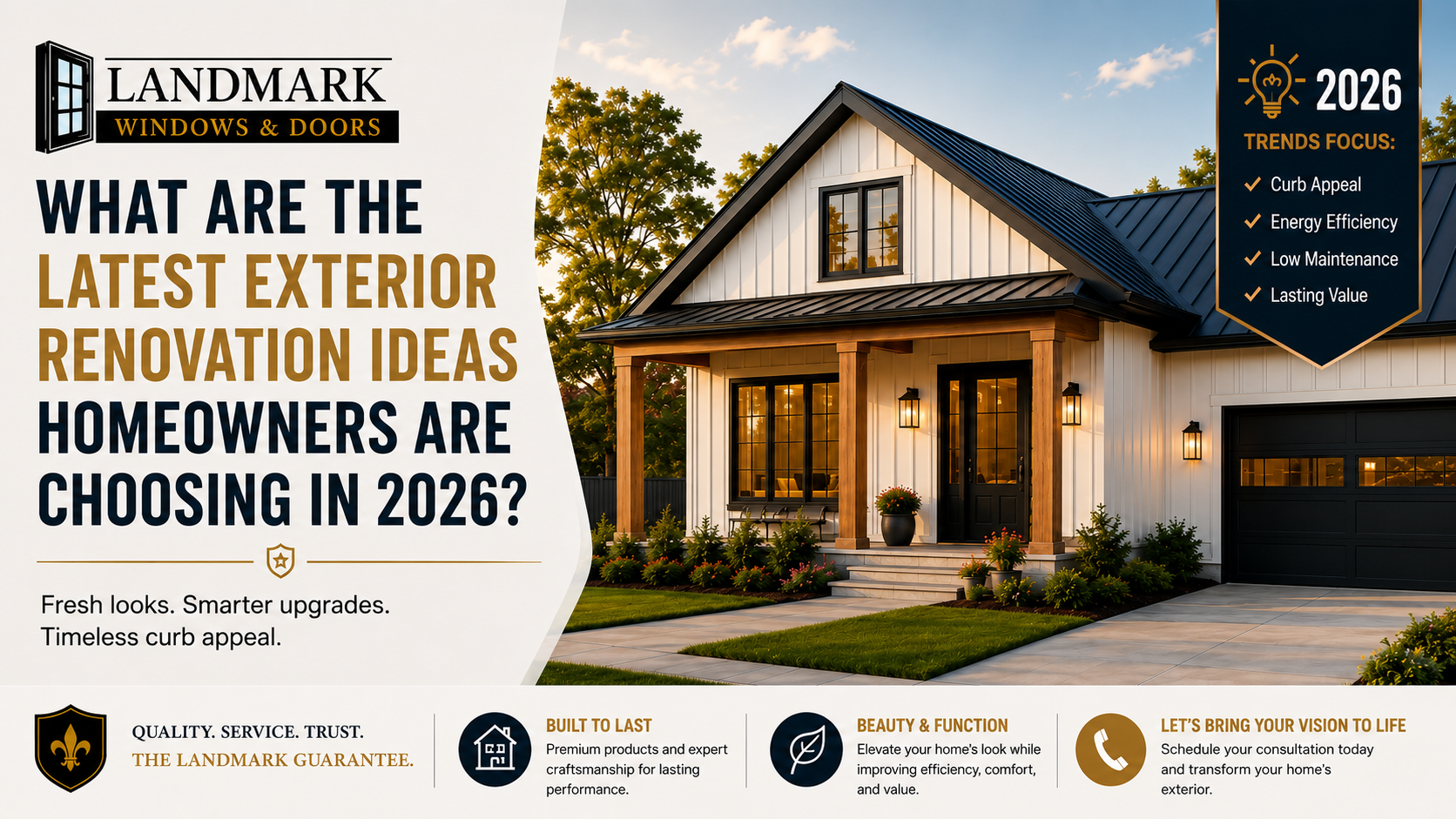
Why 2026 Is a Turning Point for Exterior Renovations
A few years ago, most exterior projects were driven by appearance first, with performance as an afterthought. That order has flipped. Homeowners are now starting renovation conversations by asking how a product will perform over the next 10, 20, or 30 years — not just how it will look on installation day.
This shift is being driven by a few converging factors: more frequent extreme weather events, rising energy costs, and a wider range of high-performing materials becoming available at more accessible price points. Put together, these factors are pushing renovation ideas toward smarter, longer-lasting choices.
The Growing Demand for Long-Term Value
Homeowners are increasingly evaluating renovation costs against the full lifespan of a product, not just the upfront price tag. A slightly more expensive door or siding option that lasts twice as long — and needs far less maintenance — is now seen as the smarter investment, not the indulgent one.
Top Exterior Renovation Ideas Homeowners Are Choosing This Year
Fiber Cement and Composite Siding
Fiber cement and composite siding have become two of the most requested upgrades we install. Both options resist moisture, warping, and pest damage far better than older wood-based siding, while still offering the classic look many homeowners want. These materials hold their color longer too, which means fewer repainting cycles over the life of the home.
Impact-Rated Windows With Reinforced Frames
Window upgrades in 2026 are leaning heavily toward reinforced vinyl frames paired with impact-rated glass. These windows are built to handle wind-driven debris and temperature extremes without warping or cracking — a meaningful upgrade for homes that have dealt with storm damage in the past. Many homeowners are also pairing these windows with Low-E coatings to cut down on heat transfer and lower monthly energy bills.
Metal and Composite Roofing Systems
Roofing choices are shifting too. While asphalt shingles remain a popular and budget-friendly option — especially when installed by GAF-certified contractors — metal and composite roofing systems are gaining ground for their resistance to wind uplift, hail, and prolonged sun exposure. Homeowners renovating older roofs are increasingly comparing lifespan and maintenance needs across all three options before deciding.
Reinforced Entry and Patio Doors
Front doors and patio doors are getting a durability-focused refresh as well. Steel and fiberglass entry doors with reinforced cores are replacing older wood doors prone to swelling and warping. Sliding and French patio doors are also being upgraded with tougher frame materials and improved weather seals, giving homeowners better protection against drafts and moisture without sacrificing the indoor-outdoor connection they’re after.
Seamless Gutters and Improved Water Management
It’s easy to overlook gutters in a renovation plan, but they play a critical role in protecting every other exterior upgrade. Seamless gutter systems, paired with properly sloped grading and quality leaf guards, prevent water from pooling near the foundation or running down freshly
installed siding. Homeowners who skip this step often end up dealing with avoidable damage just a year or two after a big renovation.
What Makes a Building Material Truly Durable in 2026
Not every product marketed as “durable” actually performs that way once installed. Homeowners evaluating durable building materials this year are generally looking at a consistent set of qualities:
- Resistance to moisture absorption, which prevents warping, swelling, and mold growth over time
- UV stability, so colors and finishes don’t fade prematurely under sun exposure
- Temperature flexibility, allowing materials to expand and contract without cracking
- Low maintenance requirements, reducing the need for frequent repainting, sealing, or repairs
- Manufacturer-backed warranties, which often signal confidence in long-term performance
- Proven track record, meaning the material has been tested in real climates over several years, not just in a lab
Materials that check most or all of these boxes tend to be the ones holding up best in the renovations we complete across Virginia.
The Role of Professional Installation in Renovation Performance
Even the best weather-resistant exterior materials can underperform if they’re installed incorrectly. A window that isn’t properly squared, siding that isn’t fastened with the right spacing for expansion, or a roof installed without correct flashing can all shorten the lifespan of an otherwise excellent product. This is one of the most overlooked parts of renovation planning — the material is only half the equation; the installation is the other half.
This is why so many homeowners are pairing premium material upgrades with experienced, certified installation teams rather than treating installation as a minor detail. A correctly installed product reaches its full warranty period and performs the way it was designed to.
Planning Your 2026 Exterior Renovation
If you’re mapping out a renovation this year, a few practical steps can help you get the most value out of the project:
- Start with the areas of your home most exposed to weather — typically the roof, siding, and any south- or west-facing windows.
- Compare material lifespans and maintenance needs side by side, not just upfront cost.
- Ask about manufacturer warranties and what’s required to keep them valid.
- Factor professional installation into your budget from the start, rather than treating it as an add-on.
- Consider how each upgrade works together — new siding paired with old gutters, for example, won’t deliver the full protection you’re paying for.
FAQs
What materials are homeowners prioritizing most in 2026?
Fiber cement siding, impact-rated windows, and reinforced entry doors — chosen for durability over trend.
Is it worth paying more for weather-resistant materials?
Usually, yes — they cost more upfront but need less maintenance and last longer.
Does installation affect how long materials last?
Yes — even premium materials can fail early if installed incorrectly.
Final Thoughts
The exterior renovation ideas 2026 homeowners are gravitating toward all share a common thread: durability and design no longer have to be separate decisions. From fiber cement siding to impact-rated windows and reinforced entry doors, today’s weather-resistant exterior materials are giving homeowners renovations that look great and perform well for decades, not just a few seasons.
At Landmark Windows & Doors, we’ve spent over 25 years helping Virginia homeowners make these decisions with confidence — matching the right durable building materials to each home and installing them with the precision needed to make them last. If you’re ready to start planning your next exterior project, we’re here to help you choose products that fit your home, your climate, and your long-term goals.