
If you’ve ever wondered why some homes have a second door in front of the entry door, that’s a storm door and despite the name, it does more than just brace against bad weather. Here’s what storm doors actually do, and how to know if your home could benefit from one.
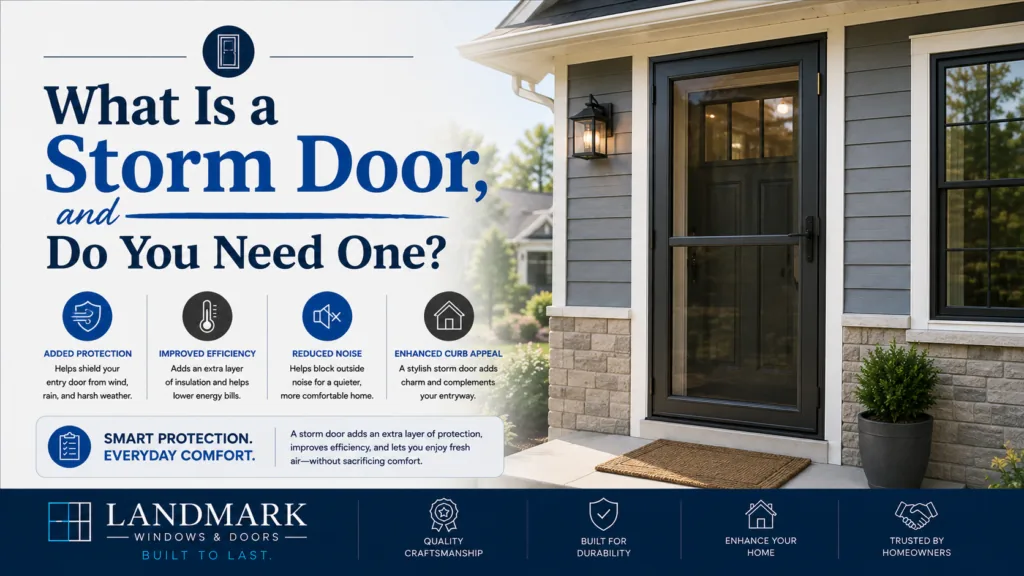
What a Storm Door Actually Is
A storm door is a secondary door installed in front of your main entry door, typically featuring a combination of glass and screen panels that can be swapped seasonally or, in many modern models, adjusted without switching panels at all. It sits in its own frame, independent of your entry door, creating a buffer zone between your home’s interior and the outside elements.
The name comes from its original purpose — protecting the entry door from wind-driven rain, snow, and general weather exposure — but storm doors have evolved into a multi-purpose addition for a lot of homeowners.
What a Storm Door Actually Does
Protects your entry door. Your entry door is a significant investment, and constant exposure to direct sun, rain, and wind gradually wears down its finish, weatherstripping, and hardware. A storm door acts as a shield, extending the life and appearance of the door behind it.
Improves energy efficiency. By creating an extra layer of insulation — essentially a buffer of air between the storm door and entry door — it can help reduce drafts and heat transfer, particularly in older homes where the entry door itself may not be as tightly sealed as a newer installation.
Adds ventilation flexibility. With the glass panel swapped for or converted to a screen, a storm door lets you open your entry door for airflow on a nice day without leaving your home fully exposed to insects or an unsecured opening.
Adds a layer of security and visibility. A closed, locked storm door adds a second barrier between your home and the outside, and many models let you see who’s at the door without fully opening your entry door.
Who Benefits Most From a Storm Door
Storm doors tend to make the most difference for:
Homes with older entry doors where the added protection can meaningfully extend the door’s lifespan
Entryways with significant sun or weather exposure — a south- or west-facing door takes far more UV and heat exposure than a shaded one
Homeowners who want more ventilation options without installing a completely different entry door style
Anyone looking to add a layer of security and visibility at the front entrance without a major renovation
What to Look For
Not all storm doors are built the same. When comparing options, it’s worth paying attention to:
Frame material and construction — a well-built frame resists warping and keeps the door operating smoothly for years
Glass and screen configuration — some models require manually swapping glass and screen panels seasonally, while others offer adjustable or retractable options built into a single panel
Hardware quality — the closer and hinges see constant daily use, so durable hardware matters more than it might seem
Conclusion
A storm door is a relatively simple addition that protects your entry door investment, adds ventilation flexibility, and can meaningfully improve energy efficiency particularly for homes with older entry doors or high sun and weather exposure. It’s a smaller project than a full door replacement, but one that can extend the life of the door you already have while adding some genuine day-to-day convenience.
If you’re considering a storm door whether alongside a new entry door or as a standalone addition we’re happy to walk you through your options during a free estimate.