
Low-E glass is one of the most common terms you’ll come across when shopping for windows or doors it shows up in nearly every product description, spec sheet, and sales conversation. But most homeowners have never had it actually explained. What is the coating made of? Does it make your home darker? Does it actually make a difference, or is it just marketing language? Here’s a complete, straightforward answer.
What Low-E Glass Actually Is
“Low-E” stands for low-emissivity. Emissivity refers to how much heat (infrared radiation) a surface radiates or absorbs. A Low-E coating is an extremely thin layer of metallic oxide so thin it’s measured in nanometers and is completely invisible to the eye applied to the surface of the glass during manufacturing.
This coating does one core job: it reflects infrared and ultraviolet light while still allowing visible light to pass through. In plain terms, it lets you see clearly through the glass while blocking the wavelengths of energy that make a room too hot in summer, too cold in winter, or cause furniture and flooring to fade over time.
How the Coating Actually Works
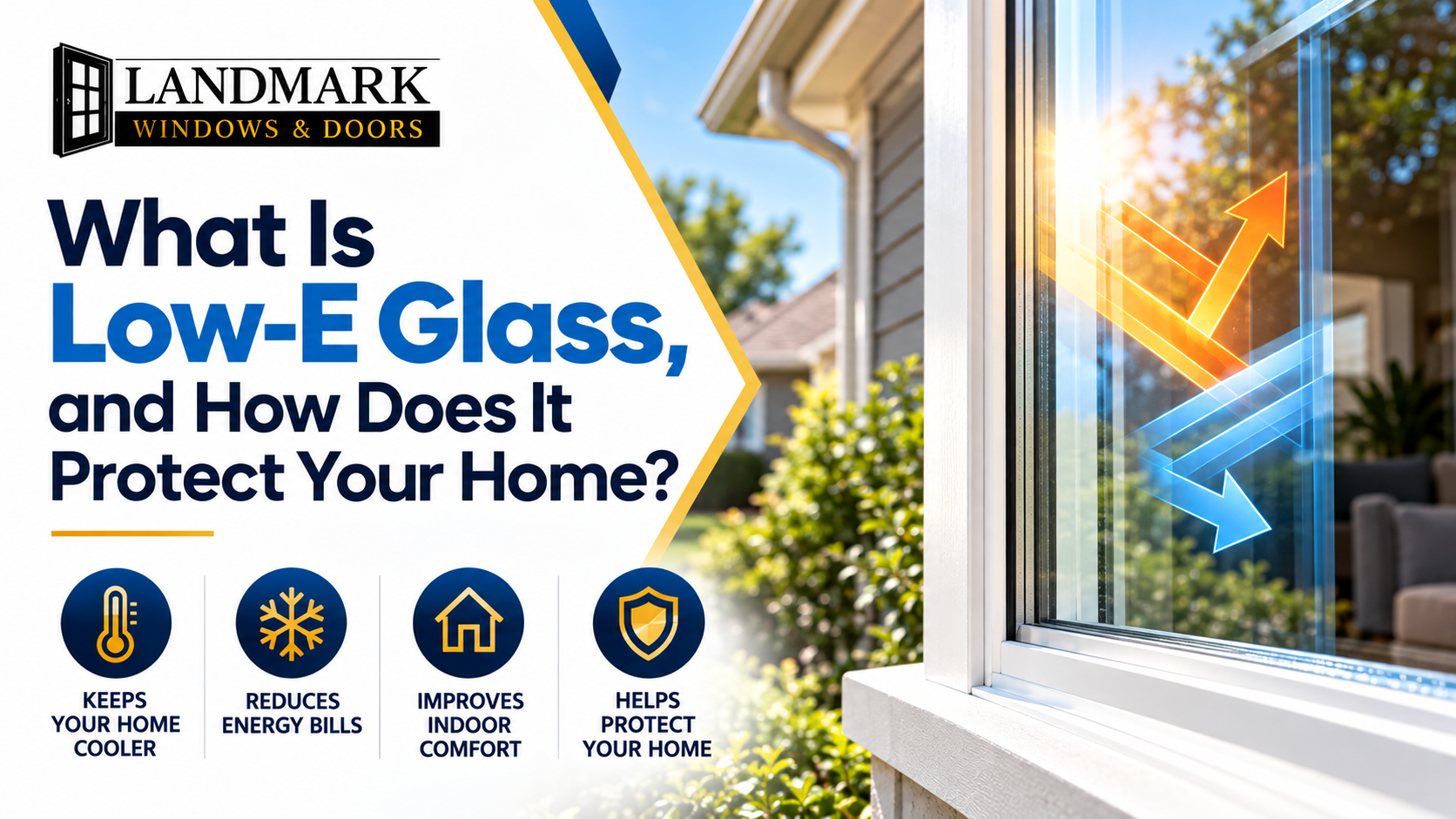
Think of Low-E coating less like a tinted film and more like a selective filter. Ordinary clear glass lets heat pass through freely in both directions that’s why a sunroom with standard glass gets uncomfortably hot in summer and loses heat quickly in winter. A Low-E coating changes that behavior in two ways:
In summer, it reflects a significant portion of incoming solar heat back outside before it ever enters your home, reducing how hard your air conditioning has to work.
In winter, it reflects interior heat back into the room instead of letting it escape through the glass, helping your heating system maintain temperature more efficiently.
This two-way effect is why Low-E glass is considered a genuine performance upgrade rather than a one-season benefit it works with your home’s climate control year-round, not just when it’s hot outside.
Does Low-E Glass Make a Room Darker?
This is one of the most common doubts homeowners have, and the honest answer is: only very slightly, and often not noticeably. Because the coating is designed to block infrared and UV wavelengths rather than visible light, most Low-E windows allow the significant majority of visible light through meaning a room stays bright and naturally lit. It is not the same as tinted or reflective glass, which is designed specifically to reduce visible light and glare. If anything, the difference most homeowners notice is less glare and less harsh heat near the window, not a dimmer room.
Hard-Coat vs. Soft-Coat Low-E: What’s the Difference?
There are two manufacturing methods for applying Low-E coatings, and it’s worth understanding the difference if you’re comparing window quotes:
Hard-coat (pyrolytic) Low-E is applied to the glass while it’s still hot during manufacturing, bonding it directly to the surface. It’s more durable and scratch-resistant, making it a common choice for single-pane applications, but it’s generally less effective at blocking heat transfer than soft-coat.
Soft-coat (sputtered) Low-E is applied in a separate vacuum process after the glass has cooled, allowing for multiple ultra-thin layers that block heat far more effectively. It’s the standard choice for most modern insulated windows, though because the coating is more delicate, it’s typically sealed between two panes of glass rather than left exposed.
For most residential window and door replacements today, soft-coat Low-E sealed within a double- or triple-pane unit is the standard it delivers meaningfully better performance than hard-coat alone.
How It Works With Multi-Pane Glass and Gas Fills
Low-E coating rarely works alone. In most modern windows, it’s paired with two additional performance features: multiple panes of glass (double or triple) and an inert gas fill usually argon or krypton sealed in the space between the panes. The gas is denser than normal air, which slows heat transfer even further than an air-filled gap would.
Together, these three elements the Low-E coating, multiple panes, and gas fill — are what create genuinely high-performing modern window units, rather than any single feature doing all the work on its own. If you’re comparing products, ask what all three specs are, not just whether the window is labeled Low-E.
Does Low-E Glass Protect Against UV Fading?
Yes, and this is one of its most practical everyday benefits. Roughly the same UV wavelengths responsible for sunburn are also the primary cause of fading in carpets, hardwood floors, furniture, and artwork positioned near windows. Because Low-E coatings block a significant portion of UV transmission, homes with Low-E glass typically see noticeably less fading over time on furnishings positioned near windows compared to homes with standard clear glass. It won’t eliminate fading entirely — direct, prolonged sun exposure will still have some effect over years but it meaningfully slows it down.
Are All Low-E Coatings the Same?
No and this is worth understanding rather than assuming every “Low-E” label means identical performance. Manufacturers produce different Low-E formulations optimized for different climates and priorities. Some are tuned to maximize solar heat gain blocking for hot climates; others are tuned to allow more passive solar warmth in colder regions where retaining winter sun exposure is more valuable than blocking it. This is why the specific U-factor and Solar Heat Gain Coefficient (SHGC) numbers on a window’s NFRC label matter more than the word “Low-E” alone two Low-E windows can perform quite differently depending on which coating formulation was used and how it was tuned for a given climate.
Conclusion
Low-E glass isn’t a marketing buzzword it’s a genuine, physics-based coating that reflects heat-carrying wavelengths while letting visible light through, working in both directions to keep your home more comfortable year-round and reducing UV-driven fading on your furnishings. The performance difference between Low-E products does vary based on coating type, pane count, gas fill, and climate tuning, which is why it’s worth discussing the specific ratings for your home rather than assuming all Low-E windows perform identically.
If you’re considering new windows or doors and want a clear explanation of what Low-E glass would mean for your specific home, we’re happy to walk through it with you during a free estimate.