
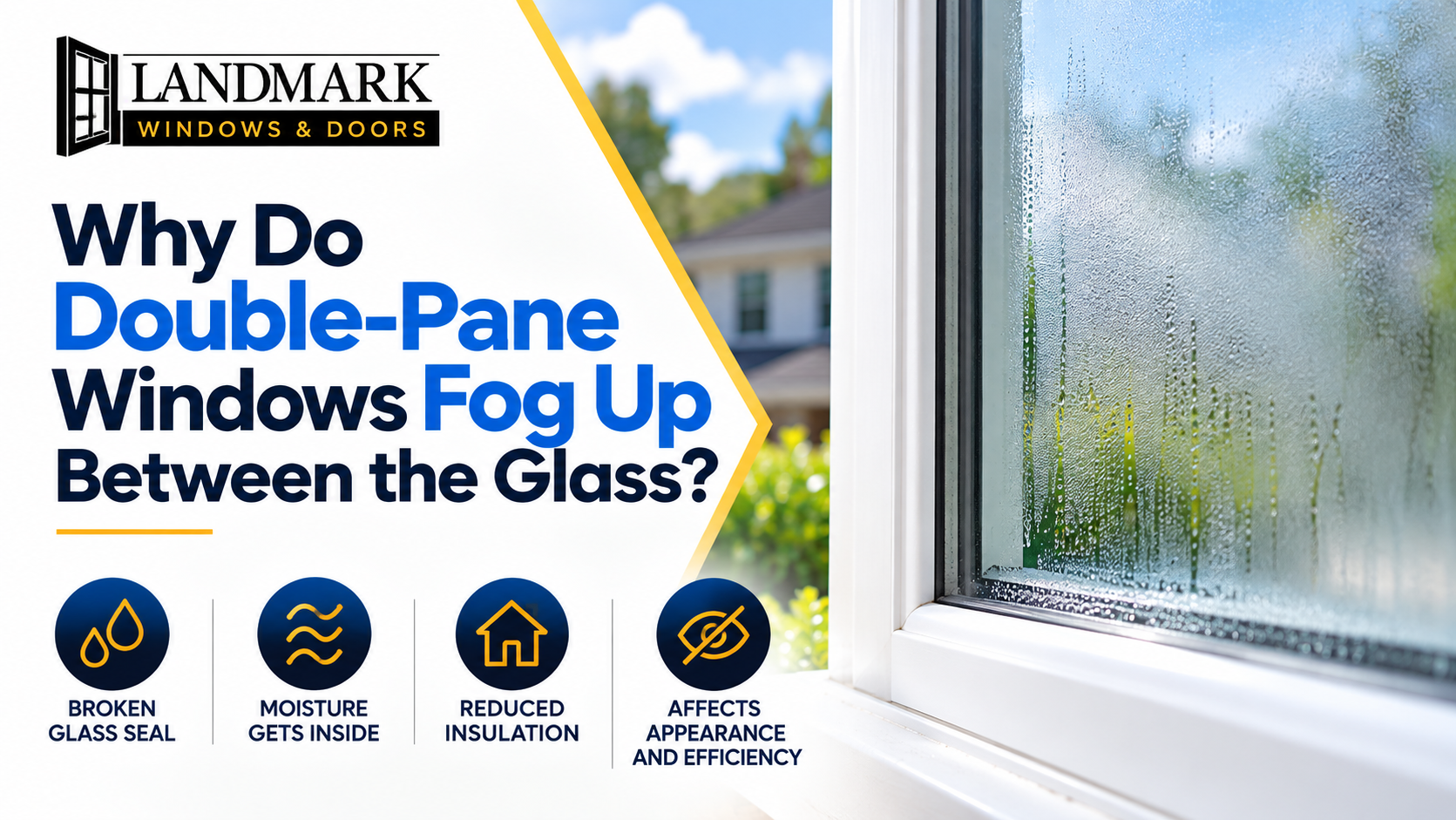
If you’ve noticed a hazy, foggy, or cloudy patch that won’t wipe away no matter which side of the glass you clean, you’re not dealing with dirt you’re looking at seal failure inside a double-pane window. It’s a common issue, but a confusing one, since the fog appears trapped somewhere you can’t physically reach. Here’s exactly what’s happening, why it occurs, and what it actually means for your window.
What’s Actually Inside a Double-Pane Window
A double-pane (or “insulated glass”) window is two sheets of glass separated by a sealed gap, with a spacer bar running around the perimeter to hold that gap consistent. Inside the spacer bar is a material called desiccant, which absorbs trace moisture, and the sealed space between the panes is typically filled with air or an inert gas like argon or krypton to improve insulation. The entire unit is sealed at the factory so that gap stays clean, dry, and undisturbed for the life of the window.
That seal is the key detail. As long as it holds, nothing from the outside world dust, moisture, pollen can ever get into that gap. Fog between the panes means the seal has been compromised.
Why the Fog Actually Forms
Once the seal fails, even a small amount, outside air carrying humidity begins to seep into the sealed gap. The desiccant inside the spacer bar is designed to absorb some moisture, but it has a finite capacity. Once it becomes saturated, it can no longer keep the trapped air dry.
From there, ordinary physics takes over: as temperature changes throughout the day, that humid trapped air condenses on the inside surfaces of the glass the same way a cold drink sweats on a humid day. Because that condensation is happening on glass surfaces sealed inside the unit, it can’t be wiped away from either side. It clears temporarily as temperatures shift, then returns, often becoming more frequent and more visible as more moisture accumulates over time.
What Actually Causes the Seal to Fail
A handful of factors contribute to seal failure over a window’s lifespan:
Age and material breakdown. The sealant and spacer materials degrade gradually over years of exposure to temperature swings, UV light, and general wear — this is normal aging, not necessarily a sign of a defective product.
Extreme temperature cycling. Repeated expansion and contraction between hot summer days and cold winter nights puts ongoing stress on the seal, which can accelerate failure over time.
Manufacturing quality. Lower-quality spacer materials and sealants fail sooner than higher-grade components this is one of the real, meaningful differences between a budget window and a well-built one.
Installation issues. A window that wasn’t properly leveled, shimmed, or sealed during installation can place uneven stress on the seal from day one, leading to earlier failure than the product would otherwise experience.
Can Foggy Glass Be Fixed, or Does the Whole Window Need Replacing?
This is the question most homeowners actually want answered, and the honest answer is: it depends on what you’re trying to accomplish.
There are companies that offer a defogging service, which drills a small hole into the sealed unit, clears the moisture, and reseals it. This can temporarily clear the fog, but it does not restore the original seal integrity or the gas fill that gave the window its insulating performance the unit will typically fog again, sometimes within a relatively short period.
The more lasting fix is replacing the insulated glass unit itself — the sealed glass package inside the frame — which restores a proper seal without necessarily requiring a full frame replacement, if the frame itself is still in good condition. If the frame is also aging, damaged, or you’re dealing with multiple foggy windows across the home, a full window replacement is often the more practical long-term choice rather than replacing individual glass units one at a time.
Does Foggy Glass Mean Something Is Wrong With My Whole Home?
No and this is a common, unnecessary worry. Seal failure is a property of that specific insulated glass unit, not a structural issue with your home, your walls, or your other windows. It also doesn’t indicate a mold or air quality problem inside your living space, since the moisture is trapped in a sealed cavity between two panes of glass, completely separate from the air inside your home. It’s a performance and appearance issue for that window not a health or safety concern.
Does a Foggy Window Still Work?
It will still open, close, and lock normally in most cases fogging is a glass seal issue, not a hardware issue. However, once the seal has failed, the window has also lost much of the insulating benefit it was designed to provide. If the gas fill has leaked out and been replaced by humid outside air, the window is no longer performing at its original energy efficiency rating, even though it may look and operate normally aside from the fog itself.
How to Avoid This With New Windows
Seal failure eventually happens to some percentage of any insulated glass unit over a long enough timeline, but the materials and construction quality of the window have a real impact on how long that takes. When choosing replacement windows, look for:
A warranty that specifically covers seal failure and glass fogging, not just frame or hardware issues.
Quality spacer and sealant materials, rather than the cheapest available components.
Proper installation by an experienced team since improper installation is one of the more preventable causes of early seal failure.
Conclusion
Fog between double-pane glass means the seal holding that sealed unit together has failed, allowing humid air in and trapping condensation where it can’t be wiped away. It’s a normal, common part of a window’s aging process rather than a sign of a bigger problem with your home, but it does mean that the window has lost its original insulating performance. Depending on the age and condition of the surrounding frame, the right fix is either a glass unit replacement or a full window replacement both of which restore a proper seal and the energy efficiency that comes with it.
If you’re noticing fog or haze in one or more of your windows and want an honest assessment of whether a glass replacement or full window replacement makes more sense for your home, we’re happy to take a look during a free estimate.