
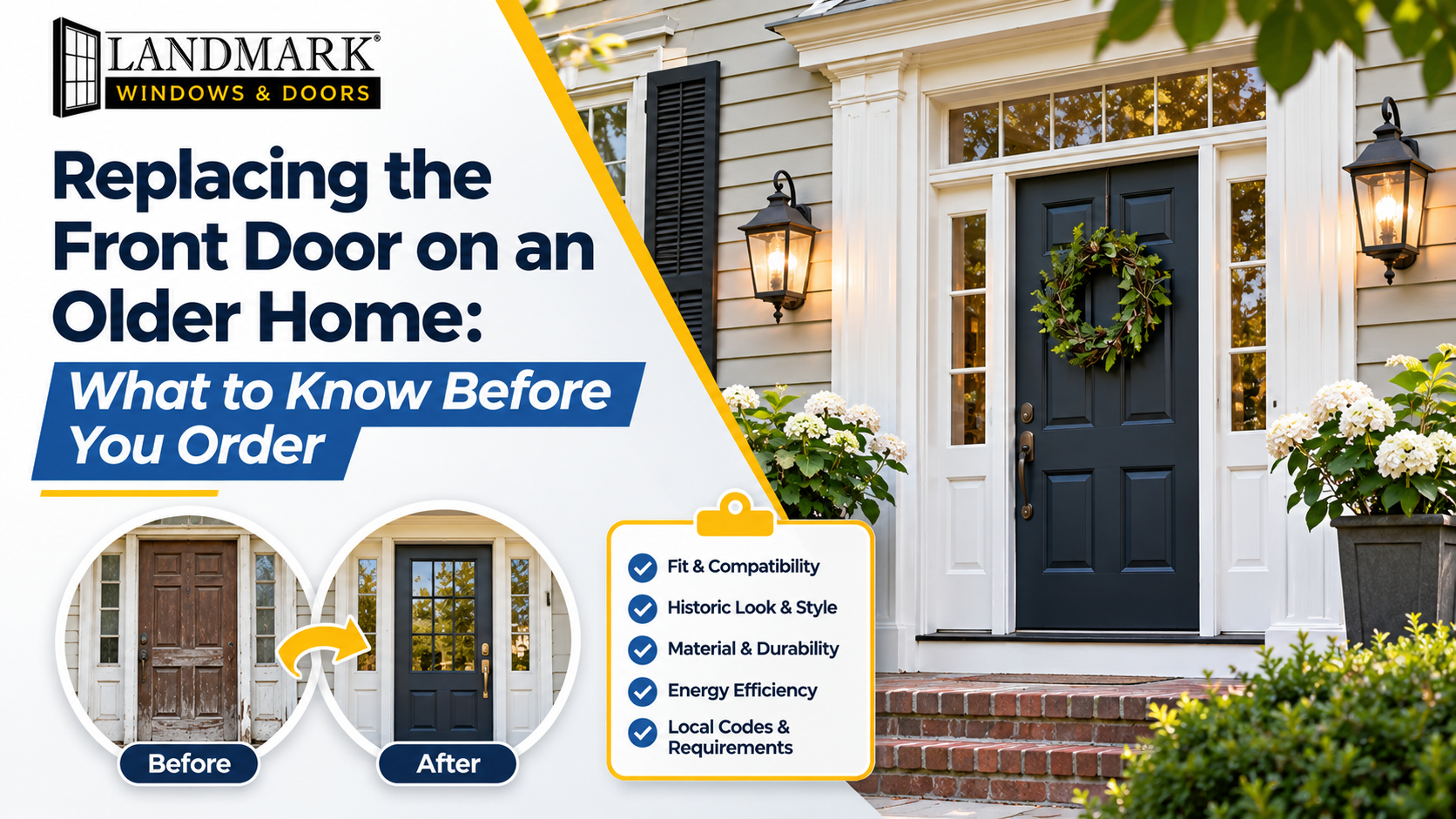
The front door of an older home does a lot of work. It sets the first impression, keeps out the weather and has often been there for decades. Replacing it takes more care than swapping a door in a newer house, because older openings rarely behave like new ones, and small mistakes at the start show up for years afterward as gaps, sticking and drafts.
Older Openings Are Rarely Standard
Homes built decades ago were often finished by hand, so the door opening may not match today’s standard sizes. It may also be slightly out of square from years of settling. That is why a door is measured at the opening before it is ordered, not chosen from a size chart. Measure the width and height in more than one place, since an opening that is a little narrower at the bottom than the top is common. A good fit at the start prevents problems later.
Check the Frame, Sill and Threshold
The door slab is only part of the story. Water tends to collect at the sill and threshold, and over time that can rot the wood underneath. Before we install a new door, we look at the jambs, the sill and the framing around them. If they are damaged, the new door will not hold up unless that is repaired first. A soft spot you can press with a screwdriver, paint that keeps bubbling at the bottom corners or daylight along the edges are all clues. Our guide to the signs you need a new front door lists what to look for.
Keeping the Look You Love
A new door does not have to change the character of the house. Our entry doors come in woodgrain, modern and smooth styles, in fiberglass or steel, and you can compare them on our Entry Doors page. If you want to see what a wood look can be, start with our Woodgrain Entry Doors. Think about the details that make your entry feel original: the paneling, the color, the hardware and the way the door sits in its frame.
Transoms and Sidelites
Many older homes have a transom above the door, and sidelites beside it. They bring light into the hall and are part of the entry’s proportions, so it is worth deciding early whether to keep, replace or add them. We offer ellipse, rectangular and circle top transom options. Sidelites can bring extra light into the entry as well. Planning the door, transom and sidelites together helps them look like one design and not three separate pieces.
Questions to Ask Any Installer
A few simple questions tell you a lot about how a door will be installed:
- Will you measure the opening yourself before ordering?
- Will you check the sill, jambs and framing for damage before the new door goes in?
- How will the threshold and the edges be sealed against water?
- What happens if hidden rot turns up when the old door comes out?
An installer who answers these clearly has usually done this work in older homes before.
Weather and Daily Use
An entry door is used every day and takes the weather on the chin. Think about the direction it faces, whether it has a porch or overhang and how much sun and rain it gets. A door that is well sealed and properly hung will close smoothly and stay weather tight. If you are replacing a door that has been sticking or leaking for years, it is a good moment to fix the cause and not just the symptom.
Check the Rules in Historic Districts and HOAs
If your home is in a historic district or an HOA, the door style, color and hardware may need approval first. In Fredericksburg, the Architectural Review Board covers the historic district. It is better to confirm before you order than after.
Conclusion
A front door replacement on an older home is worth doing carefully: measured to the opening, installed into a sound frame and chosen to suit the house. when you are ready, schedule a free estimate and we will measure the opening with you.