
New siding can transform an older home, but taking old siding off is not the same as hanging new siding on a newer house. Homes built before 1978 can come with a few extra things to know, and a careful contractor will raise them before the first board comes off.
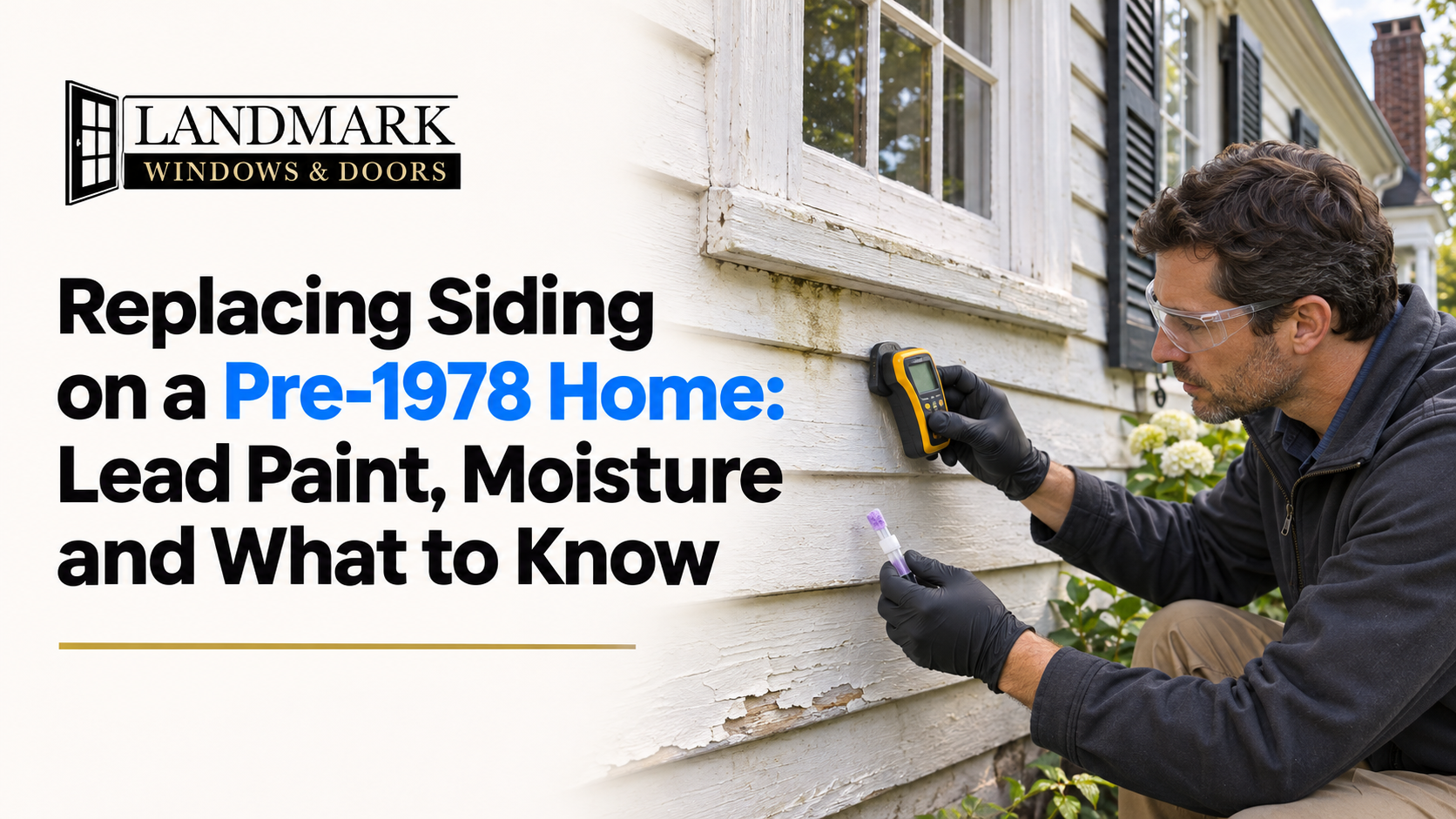
What Is Behind the Siding of an Older Home?
Siding does more than look good. Behind it sit the sheathing and the framing, and on older homes these have often been exposed to moisture for years. Many older houses were also built before modern weather barriers were common. When the old siding comes off, any hidden damage can be repaired before the new siding goes on. That is one of the best reasons to replace siding properly, instead of covering what is already there.
Signs Moisture May Already Be a Problem
Some warning signs show up before anything is removed. Look for paint that peels or blisters repeatedly, boards that feel soft near the ground or under windows, stains below the roofline, and gaps where siding meets trim. Inside, bubbling wallpaper or peeling paint on exterior walls can also point to moisture. None of these prove there is damage behind the wall, but they are worth mentioning to anyone who gives you an estimate.
Lead Paint and Why It Matters
Homes built before 1978 may have lead-based paint on the siding, trim and other exterior surfaces. EPA rules require contractors who disturb paint in homes of that age to be certified and to follow lead-safe work practices. Landmark is an EPA Lead-Safe Certified Firm. You can read the details on the EPA’s lead renovation.
Test Before You Disturb Older Siding
Some older siding materials, including certain cement-based shingles, can contain asbestos. If you are not sure what your siding is made of, have it identified and tested by a qualified professional before anyone cuts, breaks or removes it. This is general information, not a diagnosis of your home.
What Happens When the Old Siding Comes Off
Once the old siding is off, the wall can finally be seen. This is the point where a contractor can check the sheathing for soft or stained spots, look at how the windows and doors were flashed and repair anything that is not sound. Any damage found should be dealt with before the new siding goes up. Ask in advance how a hidden problem would be handled and explained to you, so there are no surprises mid-project.
Choosing a Replacement
Once the wall is sound, you have good options. We have written about vinyl vs. fiberglass siding in Virginia’s humidity, fiber cement siding, CertainTeed vinyl siding and low-maintenance composite siding. If you are not sure it is time, see the signs your siding needs to be replaced.
Details That Make Older Homes Look Right
On an older house, the trim often matters as much as the siding. Corner boards, window casings and the lines where siding meets the roof and foundation all affect how the house reads from the street. Ask how these details will be handled, not only which siding color you are getting. Matching the original look of the house is usually about these small decisions.
Questions to Ask Your Contractor
A few plain questions help you compare estimates fairly:
- Is the firm EPA Lead-Safe Certified, and will lead-safe practices be used on a pre-1978 home?
- What will be done if damaged sheathing or framing is found?
- How will the wall be protected from water behind the new siding?
- How will trim, corners and the areas around windows be finished?
Answers that are specific and unhurried are a good sign.
Check Local Rules
If your home is in a historic district or an HOA, the siding style and color may need approval. The Architectural Review Board covers the City of Fredericksburg’s historic district, and an HOA will have its own process. Confirm before you order.
Conclusion
Siding on an older home should be planned around what is underneath it. When you are ready, our Siding page shows what we install, and you can schedule a free estimate so we can look at the walls with you and answer your questions.